Award-Winning Audiology
Audiology Health Clinic of the Year 2025 — SME News Greater London Enterprise Awards.

VIP Hearing Solutions — Private Audiology
Hearing aid not working as it should? Our HCPC-registered audiologists repair hearing aids from every major manufacturer — at all three of our clinics, in London, Eastcote and Brentwood. Many repairs are carried out the same day.

Audiology Health Clinic of the Year 2025
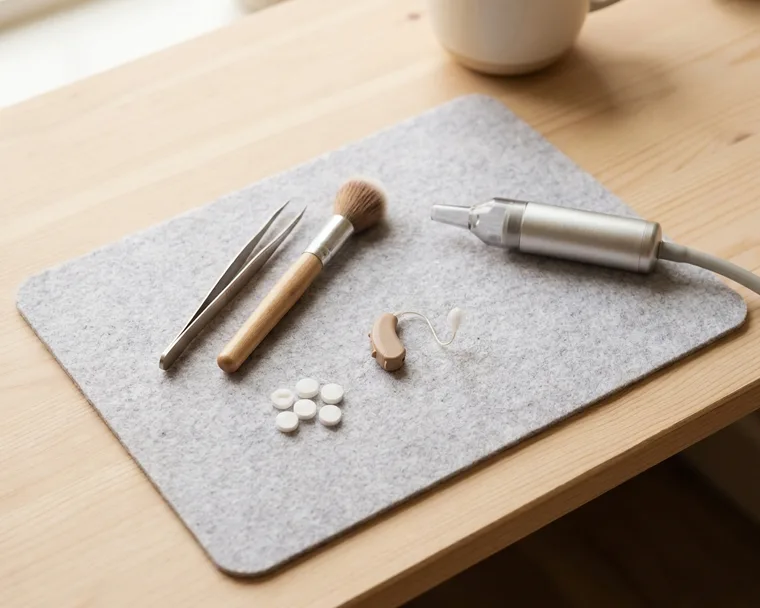
Assessed and quoted before any work begins — including hearing aids you bought elsewhere
Audiology Health Clinic of the Year 2025 — SME News Greater London Enterprise Awards.
We are not owned by a hearing aid manufacturer, so we repair and service aids from all seven major brands — including the ones we did not sell you.
Across Google and Doctify.
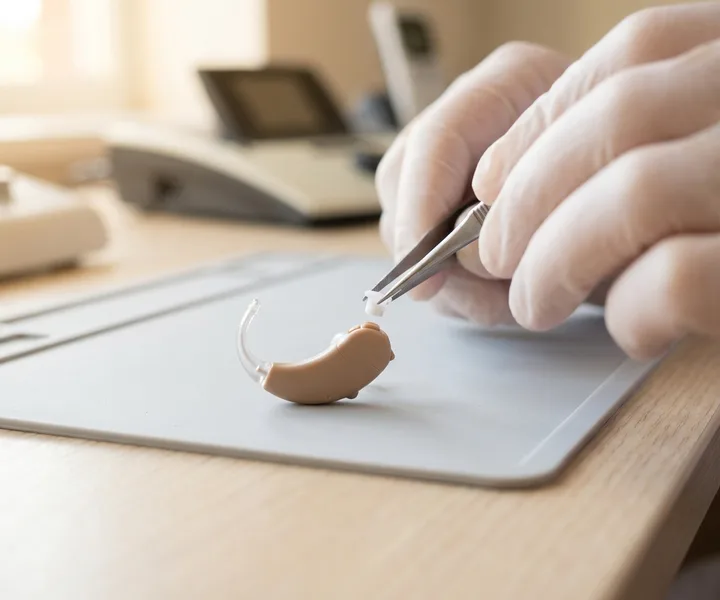
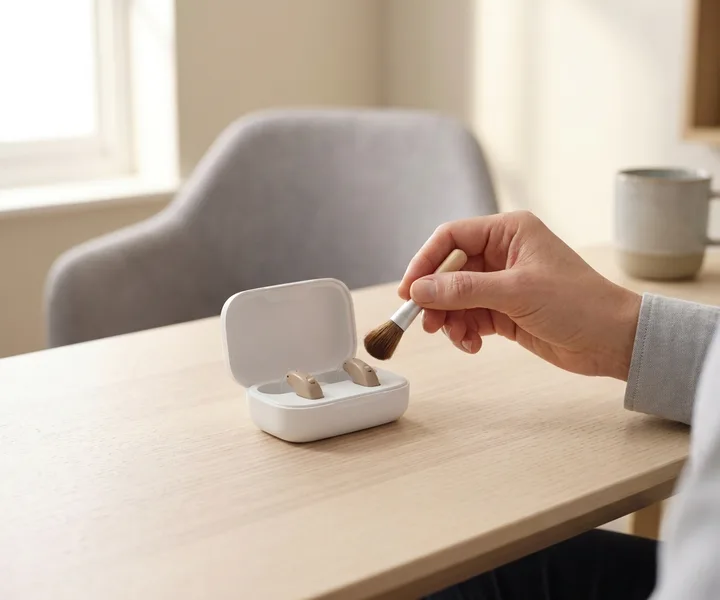
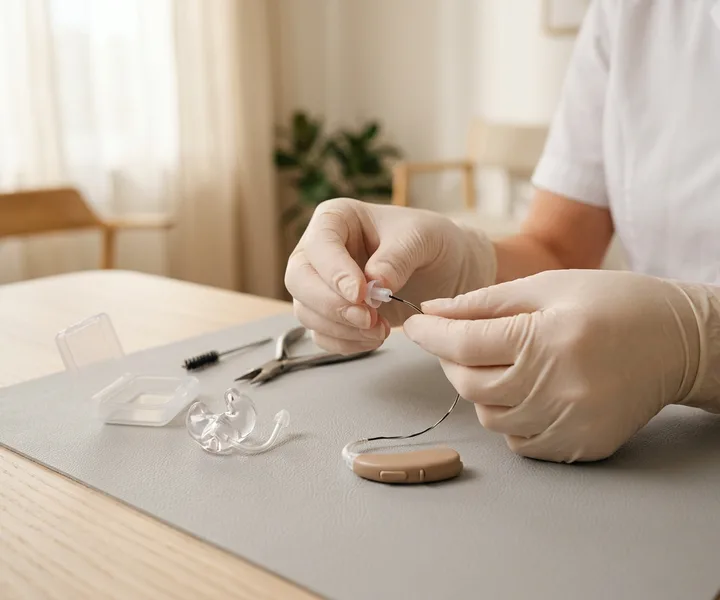
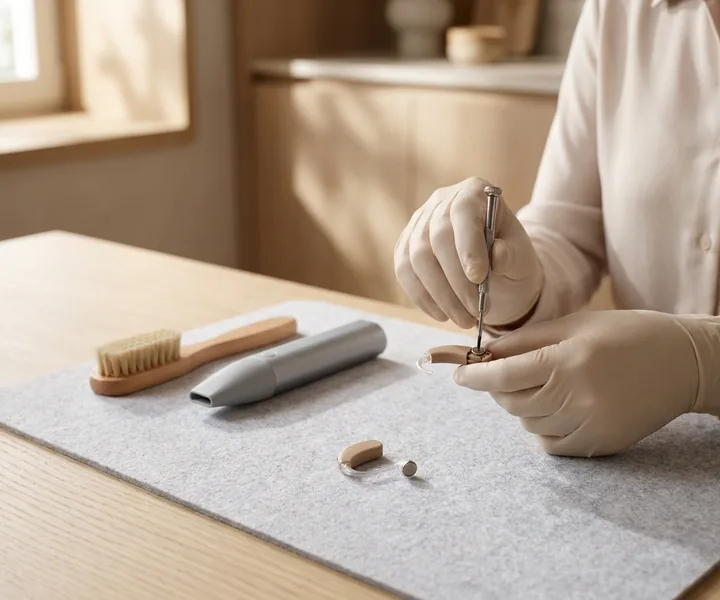
Re-tubing, wax filter changes, cleaning and dome or earmould replacement are usually done in the appointment.
The Short Answer
VIP Hearing Solutions repairs hearing aids from all seven major manufacturers at its London, Eastcote and Brentwood clinics — including aids bought somewhere else. Most faults turn out to be one of a handful: a blocked wax filter, worn tubing or a loose dome, moisture, or a charging contact that needs cleaning. Those are usually put right in the appointment. Faults inside the device itself go back to the manufacturer, and we manage that for you. Every repair is assessed and quoted before any work begins.
Faults We Fix
Hearing aids are small, hard-working devices, and most develop a fault at some point. These are the problems we see — and fix — most often.
01
Nearly always a blocked wax filter, blocked tubing or a failed receiver rather than a dead hearing aid. We clear the pathway, change the filter or tubing and test the receiver. Ear wax and hearing aids explains why this one is so common.
02
Battery contacts, a charger fault, or moisture that has found its way inside. We clean and test the contacts, dry the device properly, and tell you whether the problem is the hearing aid or the charger. If it has got wet, bring it in sooner rather than later.
03
Usually a fit problem rather than a fault — a dome that has loosened, tubing that has hardened, or an earmould that no longer seals. Why hearing aids whistle goes through the causes.
04
A microphone or receiver problem, often caused by moisture or debris working into the ports. Your audiologist inspects the device under magnification and listens to it, so we hear exactly what you have been hearing.
05
Pairing that has dropped, a phone update that has broken the connection, or streaming that keeps cutting out. We re-pair the hearing aid and set the connection up properly with your phone in front of us.
06
Cracked casings, broken battery doors, worn tubing and perished earmoulds. Some parts we replace in the clinic; some faults can only be put right in the manufacturer’s own workshop. The parts of a hearing aid explains what is what.
If your hearing aid is doing something not on this list, bring it in anyway — we will take a look and tell you honestly what is needed. Some faults can only be put right in the manufacturer’s own workshop; where that is the case we tell you before anything is sent, arrange it, and keep you updated throughout.
| Fault | Usually caused by | What we do | Where it happens |
|---|---|---|---|
| No sound or weak sound | Blocked wax filter, tubing or receiver | Clear the pathway, change the filter or tubing, test the receiver | In clinic, usually while you wait |
| Will not turn on or charge | Battery contacts, charger fault or moisture | Clean and test the contacts, dry the device, check the charger | In clinic — assessed first |
| Crackling or distorted sound | Microphone or receiver fault | Inspect and listen to the device, then replace the receiver where we can | In clinic, or the manufacturer |
| Whistling or feedback | Loose dome, hardened tubing, or an earmould that no longer seals | Re-tube, change the dome, or take a fresh impression | In clinic, usually while you wait |
| Bluetooth will not connect | Pairing, a phone update or firmware | Re-pair the hearing aid and set the connection up with you | In clinic, usually while you wait |
| Physical damage | Cracked casing, broken battery door, worn parts | Replace the part where it can be replaced | In clinic, or the manufacturer |
| Moisture and wax damage | Sweat, rain, showering, or heavy ear wax | Professional cleaning and drying | In clinic, usually while you wait |
| A loose or uncomfortable fit | Domes or earmoulds that no longer fit | Dome replacement, or a new earmould impression | In clinic — new earmoulds are made to order |
Call ahead so we can advise you and have the right parts ready · all three clinics · no referral needed
Your Appointment
Step 1 · before you come
We recommend calling ahead so we can advise you, have the right parts ready, and keep your wait to a minimum. Tell us the make if you know it and what the hearing aid is doing — that is usually enough for us to have what we need waiting.

Step 2 · about 10 minutes
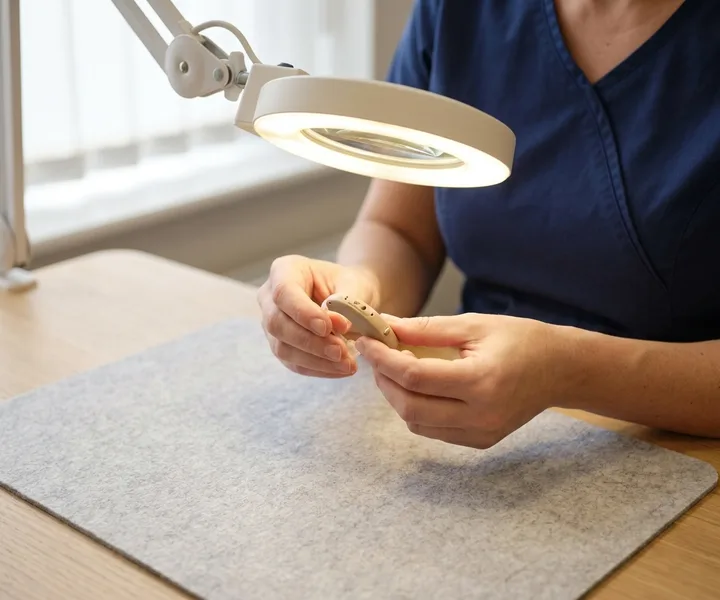
Your audiologist examines the hearing aid under magnification, looks inside your ear, and listens to the device. Most faults are found in the first few minutes — and fairly often the hearing aid turns out to be working perfectly well.
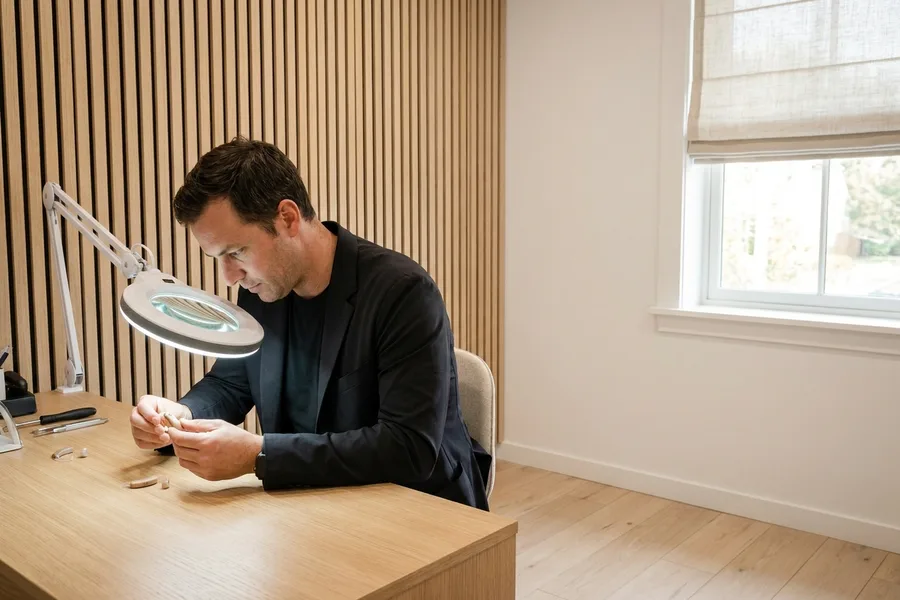
Step 3 · before anything is done
You are told what is wrong, whether it is worth repairing, and what the work will cost — before any work begins. If the fault belongs in the manufacturer’s workshop we say so, arrange it, and give you a clear timescale once we have assessed the hearing aid.
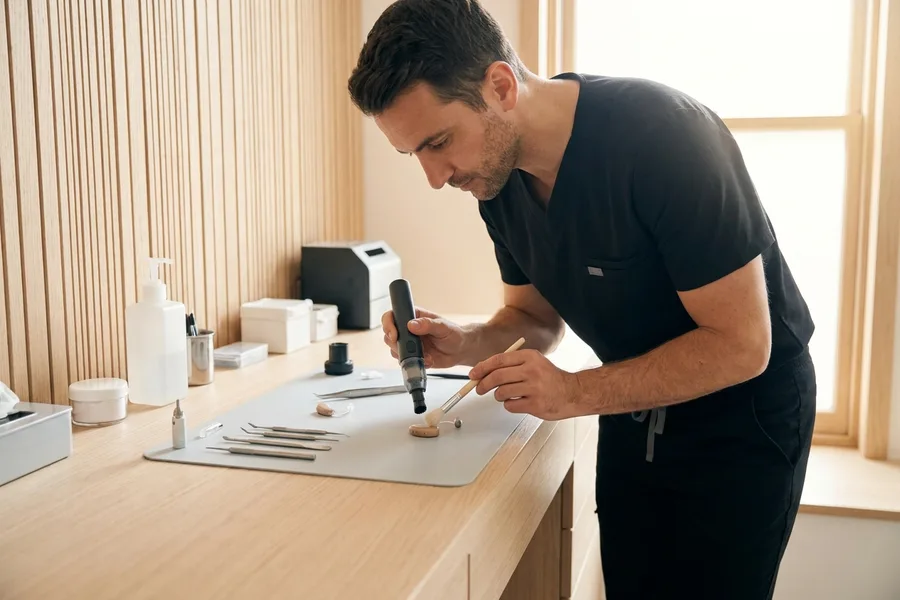
Step 4 · same visit where we can
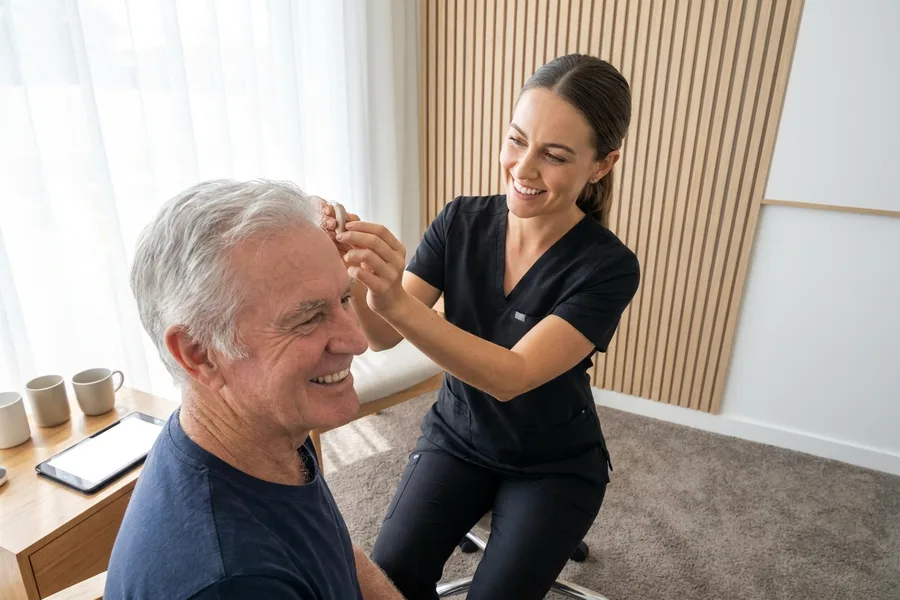
Small repairs are carried out in the appointment. Before you leave we check the hearing aid is performing properly and sitting comfortably — and if it turns out your hearing itself has changed rather than the device, we will tell you that too.
Honest Pricing
| What it depends on | Why it makes a difference |
|---|---|
| The make and model | Parts differ by manufacturer, and some older models are no longer supported by the people who made them. |
| How old the hearing aid is | Plenty of older hearing aids are well worth repairing — but parts can be harder to source as a model ages. |
| What has actually failed | Changing a wax filter and replacing a receiver are not the same job, and they should not cost the same. |
| Whether it is still under warranty | If your hearing aid is within its manufacturer warranty, we check that position as part of assessing it. |
| Whether it needs the manufacturer | Faults inside the device go back to the manufacturer’s workshop, which is a different job from a clinic repair. |
| Whether you have a VIP aftercare package | Servicing and adjustments are part of VIP Core, Gold and Diamond for hearing aids fitted by us. |
We look at the hearing aid, tell you what it needs, and give you a clear price before any work begins.
There is no single price for a hearing aid repair, and any clinic quoting one before seeing the device is guessing. What it costs depends on the make and model, how old the hearing aid is and what has actually gone wrong — so we look at it first, tell you what it needs, and quote you before anything is done.
If you would rather ask before coming in, call your nearest clinic or email info@viphearingsolutions.co.uk. Once we know the make and model we can usually give you a sense of what is involved over the phone — and book you in at the same time.
If your hearing aids were fitted by VIP Hearing Solutions and you are within your VIP Core, Gold or Diamond aftercare package, servicing and adjustments are part of that package. See what is included with our hearing aids and aftercare.
And if a hearing aid is genuinely beyond economical repair, we will tell you honestly and talk through your options — with no pressure.
Our Standards
Your hearing aid is looked at by a qualified clinician who fits and tunes these devices every working day — not sent away unseen, and not handed to a shop assistant.
Every repair is assessed by a clinician on the Health and Care Professions Council register — the UK’s statutory regulator, whose register you can check yourself.
We don’t work for manufacturers. We work for you — so we service and repair hearing aids from all seven major brands, whoever sold them to you.
If a repair turns out to need your hearing re-checked as well, we can do it properly on the same visit rather than sending you away to come back.
Every audiometer and headphone set across the three clinics is professionally calibrated at least once a year, with routine checks in between.
Your Clinicians
Your hearing aid is looked at by a HCPC-registered audiologist who fits, tunes and services these devices every working day — and who will tell you honestly when a repair is not worth doing.
 HCPC HAD00170
RHAD · MBAA
Partner & Chief of Audiology
In audiology since 1999, including 16 years as Chief of Audiology at 150 Harley Street.
 HCPC HAD03074
BSc (Hons) · MSc · MSHAA
Partner & Deputy Chief of Audiology
Practising in the Harley Street medical district for the best part of a decade.
 HCPC HAD02644
MSc Psych · MSHAA
Senior Audiologist
In hearing care since 2014. Expert in hearing rehabilitation and every method of ear wax removal.
 HCPC HAD004892
BSc (Hons) · MSc
Audiologist
MSc Audiological Science, UCL. Diagnostics, tinnitus and custom protection, with a sound-engineering background.
 HCPC HAD005650
FdSc
Hearing Aid Audiologist
Foundation Degree in Audiology, De Montfort University. Hearing-aid care and dedicated patient aftercare.
Where to Find Us

Bond Street ~5 min walk
Hearing aids in London

30 min free parking at Sainsbury’s William Hunter Way
Hearing aids in BrentwoodWe recommend calling ahead so we can advise you, have the right parts ready, and keep your wait to a minimum. Most repairs are seen the same day or, at the latest, within the same week. Not sure which clinic is closest? See all the areas we cover.
Every Major Brand
Whatever make of hearing aid you wear, our audiologists can help.
We repair hearing aids from all seven of the world’s leading manufacturers. Whether you wear a discreet in-the-ear device, a receiver-in-canal or a behind-the-ear aid, our HCPC-registered audiologists can diagnose the fault and put it right.
Bought your hearing aids elsewhere? That is no problem at all. You do not need to be an existing VIP Hearing Solutions patient — we regularly help people whose hearing aids came from another clinic, a high-street chain or an online retailer, and whose original provider is no longer convenient. See the full range of hearing aids we fit and service.
Worth Knowing
A hearing aid that has stopped working is not always a broken hearing aid. A fair share of the devices brought to us turn out to be in perfect order, and the problem is the ear or the hearing rather than the technology. One of these is worth acting on quickly.
If your hearing goes suddenly in one or both ears, that is not a hearing aid fault and it is time-critical. The NHS asks you to request an urgent GP appointment or contact NHS 111 the same day. Do not wait for a repair appointment — deal with that first, and come to us afterwards.
Ear pain, discharge from the ear, or a blocked feeling in one ear on its own should be looked at rather than watched. Your audiologist examines the ear as well as the hearing aid, and refers you on where a medical opinion is needed.
Wax is the single most common reason a perfectly good hearing aid sounds dead or starts whistling, and no amount of work on the device will fix it. We look in your ear as well as at the hearing aid, and can carry out microsuction ear wax removal in the same visit where we can.
If everything sounds quieter than it used to and the hearing aid checks out fine, the aid may simply no longer match your hearing. A diagnostic hearing test tells you, and re-programming the hearing aid to your current hearing is often all that is needed.
None of this means your hearing aid is fine — very often it genuinely does need repairing. It means the ear and the hearing aid are worth checking together, which is exactly what happens when you bring it in.
The Honest Answer
Hearing aids do not last forever. Most are built for something like five years of daily wear, and past that the arithmetic starts to change: parts get harder to source, manufacturers stop supporting older models, and the cost of a repair begins to close on the cost of replacing. Our guide to how long hearing aids last goes through it properly.
If yours has reached that point we will say so, rather than take your money for a repair that buys you six months. That is a judgement about your particular hearing aid and not a sales pitch — plenty of hearing aids well past their fifth birthday are worth fixing, and we fix them.
If it is genuinely time to look at something newer, the technology has moved a long way: rechargeable batteries instead of tiny cells, Bluetooth streaming straight from your phone and television, and processing that adapts to the room you are in. You can see the hearing aids we fit and what is included on our hearing aid prices page. Every fitting comes with a free, no-obligation 30-day home trial and a VIP Core, Gold or Diamond aftercare package covering servicing and adjustments — but there is no rush, and no one here will push you.
From the Library
Common Questions
Yes. We repair hearing aids regardless of where you bought them — whether from another audiologist, a high-street chain or online. You do not need to be an existing VIP Hearing Solutions patient.
We repair hearing aids from all major manufacturers, including Phonak, Starkey, Oticon, Widex, ReSound, Unitron and Signia, in every style — from invisible in-the-ear devices to behind-the-ear aids.
Many minor repairs — such as re-tubing, wax filter changes and cleaning — are done the same day, often while you wait. More complex faults may need to be sent to the manufacturer, which takes longer; we will give you a clear timescale once we have assessed your hearing aid.
It depends on the make and model, how old the hearing aid is, and what has actually failed — which is why VIP Hearing Solutions looks at the device before quoting rather than giving a figure over the phone. We assess your hearing aid, tell you what it needs, and give you a clear price before any work begins. If your hearing aids were fitted by us and you are within your VIP Core, Gold or Diamond aftercare package, servicing and adjustments are part of that package.
We recommend calling your nearest clinic first, so we can advise you, book you in, and have the right parts ready — which keeps your wait to a minimum.
In most cases, yes. We can often service and repair older hearing aids. If an aid is genuinely beyond economical repair, we will tell you honestly and talk through your options — with no pressure.
All three of our clinics offer hearing aid repairs — London Wimpole Street, Eastcote and Brentwood. All three are open Monday to Friday, 9am to 5pm.
Three things are worth checking before you book anything. First, the wax filter at the tip of the receiver: a blocked filter is the most common single cause of a hearing aid going quiet, and changing it takes moments. Second, the battery or the charger — make sure the hearing aid is genuinely charging and that the contacts are clean and dry. Third, your own ear, because wax in the ear canal will make a perfectly good hearing aid sound dead. If none of those is the answer, bring the hearing aid in to VIP Hearing Solutions and we will diagnose it properly.
Yes. If your hearing aid may still be within its manufacturer warranty, tell us when you book and bring any paperwork you still have, because it helps us confirm the purchase date. VIP Hearing Solutions checks the warranty position as part of assessing the hearing aid, and where a repair needs to go back to the manufacturer we arrange that for you and keep you updated.
In Our Patients’ Words
Live Google reviews from VIP Hearing Solutions patients across all three clinics.
Book Your Visit
Don’t put up with a hearing aid that isn’t performing. Call your nearest clinic and we will get it sorted — quickly, and without fuss.
Or email info@viphearingsolutions.co.uk