
Award-Winning Audiology
Audiology Health Clinic of the Year 2025 — SME News Greater London Enterprise Awards.

VIP Hearing Solutions — Private Audiology
Structured, audiologist-led tinnitus care at our London, Eastcote and Brentwood clinics. There may be no pill that switches tinnitus off — but its grip on your day is not fixed. How loud, how intrusive and how stressful it feels can all be changed, and an unhurried hour with a HCPC-registered audiologist is where that starts.

Audiology Health Clinic of the Year 2025
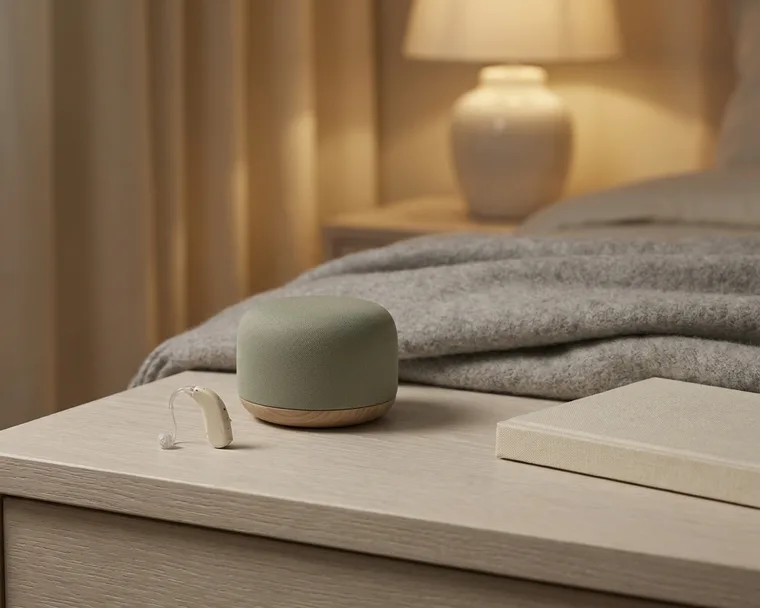
Tinnitus is manageableHow loud and intrusive it feels can change
Audiology Health Clinic of the Year 2025 — SME News Greater London Enterprise Awards.
Tinnitus is never squeezed into a ten-minute slot here — and you get over 50 years of combined experience behind the plan.
Across Google and Doctify.
BSA-aligned procedures, annually calibrated equipment, soundproof booths.
The Short Answer
Tinnitus treatment works by reducing how much the sound intrudes on your life — and for most people that is very achievable. It starts with a full hearing assessment to find what is driving the sound, then combines the options that suit your case: hearing aids where hearing loss is present, sound enrichment, and education and counselling. At VIP Hearing Solutions that begins with one full clinical hour — £100 at all three clinics.
What Actually Helps
Tinnitus therapy at VIP Hearing Solutions combines the options below — there is no single treatment that suits everyone.
01
Where a hearing loss is found, restoring the missing input is often the single most useful step — and modern hearing aids carry built-in tinnitus masking programmes.
02
Tinnitus is loudest where there is least to compete with it. We help you build low-level sound into the moments it bites hardest — at your desk, in the car, in the evening.
03
Knowing what the sound is, what it is not, and why it behaves as it does removes most of the threat your brain attaches to it. Patients tell us this is the part that changed things.
04
NICE recommends psychological therapy for tinnitus-related distress, from digital and group programmes through to one-to-one CBT. It is delivered by psychologists, so we refer you on where it fits.
05
One-sided tinnitus, a sound a clinician can hear, or anything warranting a medical opinion gets a referral letter to ENT — written by the audiologist who assessed you, with your results attached.
VIP Hearing Solutions does not offer surgery, drug therapy or neuromodulation devices for tinnitus — where those are worth exploring, that conversation belongs with an ENT specialist.
| Option | Best for | Delivered by | Included in the £100 hour |
|---|---|---|---|
| Hearing aids with tinnitus programmes | Tinnitus alongside hearing loss | Audiologist | Assessment yes — aids quoted separately |
| Sound enrichment & masking | Tinnitus worst in quiet | Audiologist | Yes — plan included |
| Education & counselling | Tinnitus-related worry | Audiologist | Yes |
| CBT for tinnitus | Significant distress | Psychologist, by referral | Referral yes — therapy separate |
| ENT referral | One-sided or objective tinnitus | ENT, by referral | Referral letter included |
One full hour · £100 · no GP referral needed
Your Appointment
Step 1 · about 20 min
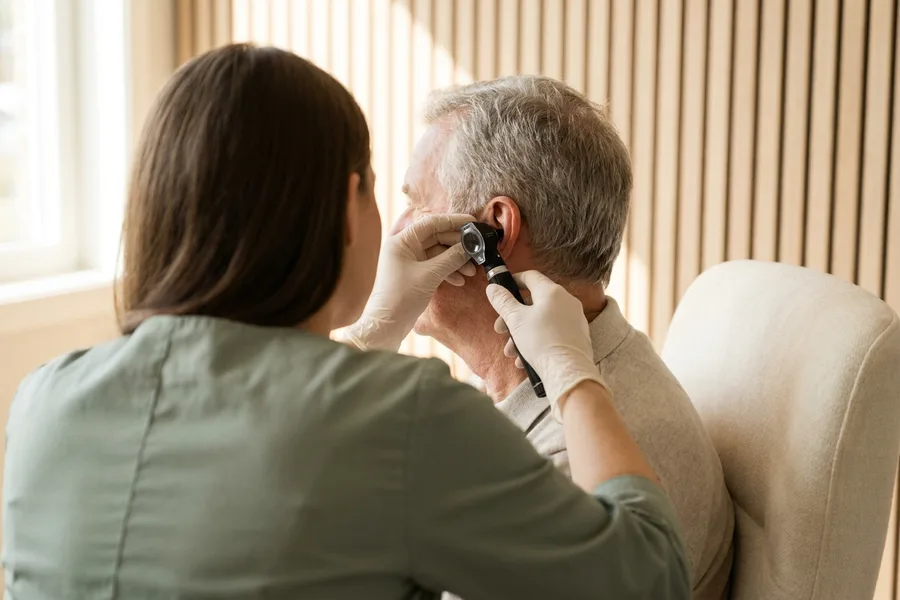
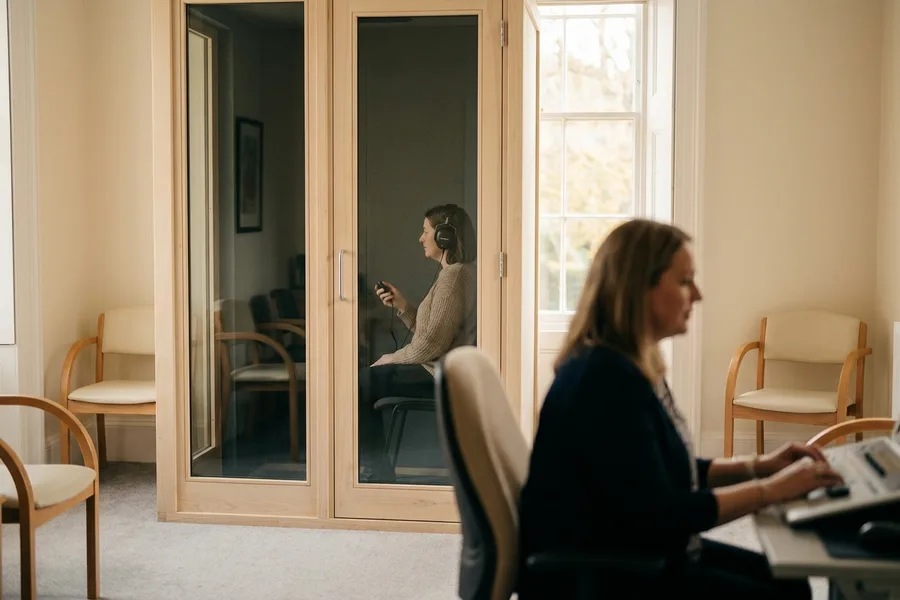
Your audiologist takes your history first — when it started, what it sounds like, what makes it worse — then otoscopy and a full hearing test in a soundproof booth, plus a structured questionnaire measuring the impact it is having.
Step 2 · about 15 min
Where it helps, we match the pitch and loudness of your tinnitus and test masking levels. Then your audiologist explains what the results show, in plain English, on the same day.
Step 3 · about 20 min
You and your audiologist agree the combination that fits your case — sound enrichment, hearing aids with tinnitus programmes, a CBT or ENT referral where it helps — and you leave knowing exactly what happens next.

Step 4 · if you need us
For many patients one appointment is enough. Where your plan needs tuning — a different sound level, a hearing aid programme adjusted — we review it and stay the point of contact you come back to, rather than starting again elsewhere.

Transparent Pricing
£100
One full clinical hour
A complete tinnitus assessment and management appointment with a HCPC-registered audiologist — the same price at London, Eastcote and Brentwood, with nothing held back for a second visit.
Our Standards
All our HCPC-registered audiologists follow the British Society of Audiology’s recommended procedures — the gold standard for hearing assessment.
Every hearing test behind a tinnitus plan follows the British Society of Audiology’s published methods.
Accurate thresholds at all three clinics, measured without interruption.
Every audiometer and headphone set is professionally calibrated at least once a year, with routine checks in between.
We will tell you what is likely to help, what is worth trying, and what nobody can promise — and we will never sell you something you do not need.
Your Clinicians
Your tinnitus appointment is with a HCPC-registered audiologist who assesses and manages tinnitus as part of their regular clinical work — not a call handler working from a script.
 HCPC HAD00170
RHAD · MBAA
Partner & Chief of Audiology
In audiology since 1999, including 16 years as Chief of Audiology at 150 Harley Street.
 HCPC HAD03074
BSc (Hons) · MSc · MSHAA
Partner & Deputy Chief of Audiology
Practising in the Harley Street medical district for the best part of a decade.
 HCPC HAD02644
MSc Psych · MSHAA
Senior Audiologist
In hearing care since 2014. Expert in hearing rehabilitation and every method of ear wax removal.
 HCPC HAD004892
BSc (Hons) · MSc
Audiologist
MSc Audiological Science, UCL. Diagnostics, tinnitus and custom protection, with a sound-engineering background.
 HCPC HAD005650
FdSc
Hearing Aid Audiologist
Foundation Degree in Audiology, De Montfort University. Hearing-aid care and dedicated patient aftercare.
Where to Find Us

Bond Street ~5 min walk
Tinnitus clinic in London

30 min free parking at Sainsbury’s William Hunter Way
Tinnitus clinic in BrentwoodNot sure which clinic is closest? See all the areas we cover.
Why It Happens
Tinnitus is a problem of processing rather than a fault waiting to be cut out — and the same filtering system that learned to register the signal can learn to screen it back out again. That is habituation: the sound stops being classified as important, and gradually stops reaching conscious attention. It cannot be forced and it does not run to a timetable. Tinnitus therapy is the structured route towards it.
For the full explanation of what tinnitus is and what causes it, read our guide to tinnitus.
Safety First
Most tinnitus is not an emergency — but a small number of presentations are, and recognising them matters more than any reassurance we could offer.
Go to A&E or call 999 if tinnitus follows a head injury, or comes with sudden hearing loss, weakness in the muscles of your face, or a spinning sensation (vertigo).
Ask for an urgent GP appointment if the sound throbs in time with your heartbeat — this is pulsatile tinnitus, and the NHS lists it as a reason to be seen urgently.
Hearing loss that came on over three days or less, at any point in the past 30 days, should be assessed within 24 hours — NICE asks that you be referred to an ENT or audiovestibular service within 24 hours, so contact your GP or NHS 111 the same day rather than waiting for a private appointment.
If tinnitus is pulling at your concentration, your mood or your evenings, that is exactly what a structured assessment is for — and you do not need a GP referral to book one. A full hour with one of our audiologists gets you a clear picture of what is driving it and a plan to act on.
For the great majority of people none of these urgent signs is present. Tinnitus is common, and only very seldom points to anything dangerous — most often it is the first audible clue to hearing loss that has simply never been checked, which is why assessment, not alarm, is the right first step. If any of the signs above do apply to you, act on those first.
From the Library
Questions, Answered
There is no single best treatment, because the right combination depends on what is driving your tinnitus. Where a hearing loss is found, hearing aids are usually the most useful single step. Alongside them, sound enrichment, education and counselling, and cognitive behavioural therapy for tinnitus-related distress all reduce the impact. Assessment comes first — treating the wrong thing helps nobody.
Ringing in the ears is the most common form of tinnitus, and it is treated the same way: a full hearing assessment first to find what is driving the sound, then hearing aids where hearing loss is present, sound enrichment, education and counselling, and CBT where the ringing is causing distress. VIP Hearing Solutions assesses ringing in the ears in one full clinical hour, £100, at its London, Eastcote and Brentwood clinics.
Private tinnitus treatment at VIP Hearing Solutions costs £100 for a full clinical hour with a HCPC-registered audiologist — the same price at the London, Eastcote and Brentwood clinics. That covers full history and otoscopy, a complete hearing test in a soundproof booth, tinnitus matching and masking-level testing where helpful, and a management plan explained the same day. Onward care such as hearing aids or masking devices is quoted separately.
Tinnitus often does settle by itself — tinnitus that arrives after a loud concert or during a period of stress frequently resolves, and NICE asks clinicians to reassure patients at first contact that it may. It is still worth having assessed, because you cannot tell from the sound alone whether an undiagnosed hearing loss is driving it. Where it persists, the aim of management shifts: many people find the brain gradually learns to filter the sound out of conscious awareness, so it matters less even though it has not stopped.
Tinnitus is very rarely a sign of something serious. It is most often the first audible sign of hearing loss that has not been diagnosed. There are exceptions worth knowing. Go to A&E, or call 999, if the sound started after a blow to the head, or arrives alongside a sudden drop in hearing, weakness in the muscles of your face, or a spinning sensation. Ask for an urgent GP appointment if it throbs in time with your heartbeat, or if it is only in one ear and persists. Otherwise, tinnitus is something to get assessed rather than something to worry about.
A tinnitus specialist audiologist carries out a full diagnostic hearing assessment in a soundproof booth, matches the pitch and loudness of the tinnitus, tests masking levels, and measures the impact with a structured questionnaire — then builds a management plan from those results. A GP can rule out infection and ear wax and refer onward, but does not have booth-based audiometry or tinnitus matching. VIP Hearing Solutions does this in one full clinical hour, with no GP referral needed.
Habituation is your brain learning to reclassify the tinnitus as an unimportant background signal and filter it out of conscious awareness — the same way it already tunes out the fridge or passing traffic. It is the mechanism behind most successful tinnitus management. It cannot be forced, and it does not run to a fixed timetable, but it is what good care is working towards.
Hearing aids do not help tinnitus when hearing is normal, and VIP Hearing Solutions will not sell a pair on that basis. NICE is explicit that amplification should not be offered to people who have tinnitus but no hearing loss, because there is no missing input for the aid to restore. Where a hearing test comes back clear, the plan centres on sound enrichment, counselling and, where distress is significant, a CBT referral.
It helps to avoid true silence. Most people find that with nothing else competing for attention, the sound moves straight to the front of it. You do not need to drown it out — many patients find low-level background sound at a comfortable level, while they work, read or fall asleep, is enough to change how prominent tinnitus feels.
Time to improvement varies, and VIP Hearing Solutions would rather set an honest expectation than a marketing one. Where hearing aids are part of your plan, many patients tell us the tinnitus becomes less prominent over the first few weeks of consistent daily use — but there is no reliable timeline, and some notice little change. Habituation is slower still and does not run to a schedule, which is why we review your plan rather than fitting you once and waving goodbye.
Around 1 in 7 UK adults — over 7 million adults — live with tinnitus, according to RNID. For most it is intermittent or mild; a smaller group find it persistent and distressing enough to need clinical support. Tinnitus is closely linked to hearing loss, which is why a full hearing assessment is the starting point for treating it.
In Our Patients’ Words
Live Google reviews from VIP Hearing Solutions patients across all three clinics.
Book Your Visit
A full hour with a HCPC-registered audiologist — £100, the same at all three clinics; same-day where possible, otherwise within the week.
Or email info@viphearingsolutions.co.uk