

On This Page
- What is Tinnitus?
- How Hearing Aids Help with Tinnitus
- How Long Does it Take for Hearing Aids to Provide Relief from Tinnitus?
- Tips for Maximising the Effectiveness of Hearing Aids for Tinnitus
- When to Expect Full Benefits from Hearing Aids for Tinnitus
- Common Challenges When Using Hearing Aids for Tinnitus
- When to Seek Further Help for Tinnitus Relief
- Final Thoughts
Tinnitus can be incredibly frustrating, impacting your ability to focus, sleep, and even enjoy daily activities. If you’re dealing with that constant ringing, buzzing, or humming in your ears, you’re probably eager to find relief—and you’re not alone. Many people turn to hearing aids as a way to manage tinnitus symptoms, but one of the most common questions is: How long does it take for hearing aids to help with tinnitus?
The answer isn’t as straightforward as you might hope. The timeline for relief varies from person to person, depending on several factors, including the severity of your tinnitus, your hearing loss, and how well your brain adapts to the hearing aids. In this guide, we’ll break down what to expect, how hearing aids can help, and how to maximise their effectiveness for tinnitus relief. So without further ado, let’s learn more about tinnitus!
What is Tinnitus?
Tinnitus is the perception of sound, such as ringing, buzzing or humming, when no external source is present. It is usually a symptom of an underlying issue rather than a condition in itself, often linked to hearing loss, earwax build-up or ear infections. It can be constant or come and go.
Tinnitus is the perception of noise or ringing in the ears when no external sound is present. It’s often described as a ringing, buzzing, humming, or whooshing sound that can be constant or intermittent. Tinnitus isn’t a condition itself but a symptom of an underlying issue, such as hearing loss, ear injury, or circulatory problems.
The severity of tinnitus varies widely—some people find it mildly annoying, while others experience it as a constant, disruptive noise. It’s often linked to hearing loss because when your brain isn’t receiving the full range of sound frequencies, it tries to “fill in the gaps,” leading to the perception of phantom noises.
How Hearing Aids Help with Tinnitus
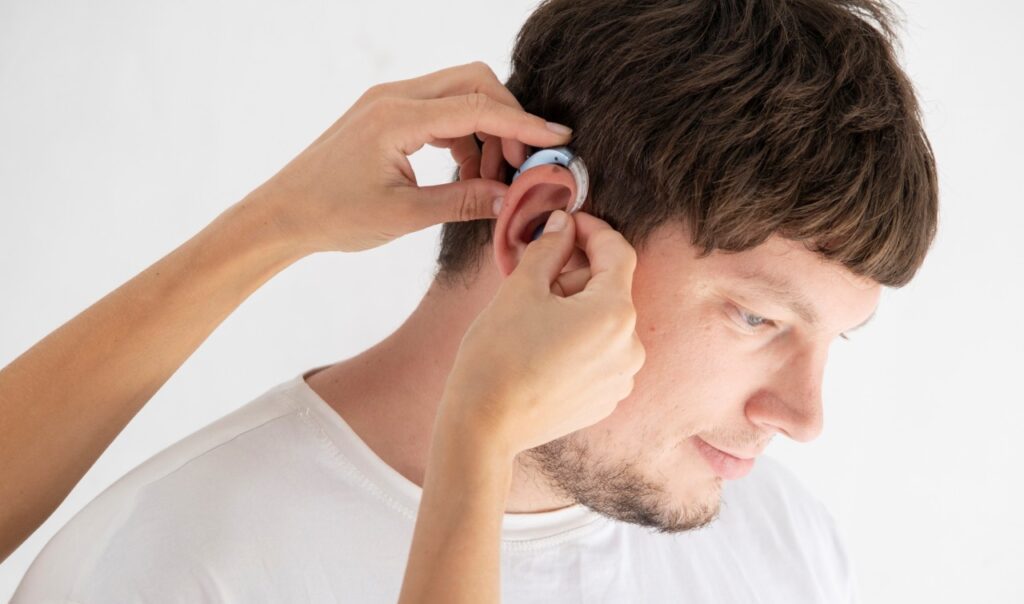
Hearing aids can be incredibly effective at managing tinnitus symptoms. They work by amplifying external sounds, which helps to mask the internal noise of tinnitus. By increasing the volume of ambient sounds, hearing aids reduce the contrast between external noises and the phantom noises caused by tinnitus, making the ringing or buzzing less noticeable.
Some modern hearing aids are designed specifically for tinnitus relief, equipped with built-in sound therapy features. These devices generate soothing background sounds, like white noise or ocean waves, which help to mask tinnitus and promote relaxation. By giving your brain more external sounds to process, hearing aids can help “retrain” the auditory system, reducing the perception of tinnitus over time.
How Long Does it Take for Hearing Aids to Provide Relief from Tinnitus?
There is no fixed timeline: some people feel relief quickly, while others take longer. Tinnitus UK notes it usually takes just a few weeks to adapt to hearing aids, after which many become less aware of their tinnitus. Wearing them consistently, in both ears, helps most.
The Timeline for Tinnitus Relief
The timeline for experiencing relief from tinnitus varies from person to person. Some people notice an improvement within a few days, while others may take several weeks or even months to adjust fully. On average, most users start experiencing noticeable relief within four to six weeks of consistent use.
However, it’s important to remember that tinnitus relief isn’t always immediate. Hearing aids help your brain to re-engage with external sounds, which takes time. Your brain needs to “relearn” how to process sounds properly, which is why patience and consistent use are essential for long-term success.
Factors That Affect the Timeline
Several factors influence how long it takes for hearing aids to help with tinnitus:
- Severity of Tinnitus: People with mild tinnitus may experience faster relief, while those with more severe symptoms may require a longer adjustment period.
- Degree of Hearing Loss: If your tinnitus is linked to significant hearing loss, it may take longer for your brain to adapt to the new sounds provided by the hearing aids.
- Type of Hearing Aid: Modern hearing aids with sound therapy features may provide faster relief compared to basic models without tinnitus-specific functions.
- Consistency of Use: Regular and consistent use of hearing aids is key to retraining your brain and achieving long-term relief.
Tips for Maximising the Effectiveness of Hearing Aids for Tinnitus

Work with Your Audiologist to Find the Right Settings
No two cases of tinnitus are the same, which is why it’s so important to work closely with your audiologist. They can help you find the best settings and programmes tailored to your specific tinnitus needs – this might involve adjusting the volume, experimenting with different sound therapy options, or fine-tuning the frequencies that are most effective at masking your tinnitus.
Gradual Acclimatisation to Hearing Aids
When you first start using hearing aids, it’s normal to feel overwhelmed by all the new sounds. Your brain needs time to adjust, so it’s a good idea to ease into it gradually. Start by wearing the hearing aids for a few hours a day, then gradually increase the duration as you become more comfortable.
This gradual acclimatisation helps your brain to adapt to the amplified sounds without becoming overstimulated, making the transition smoother and more effective in reducing tinnitus symptoms.
Combine Hearing Aids with Tinnitus Management Techniques
While hearing aids can be highly effective, they work even better when combined with other tinnitus management techniques. Relaxation exercises, mindfulness meditation, and cognitive behavioural therapy (CBT) can help you manage the emotional and psychological impact of tinnitus.
For some people, tinnitus is linked to stress or anxiety, so learning relaxation techniques can be particularly beneficial. Combining these methods with hearing aids creates a holistic approach to managing tinnitus, addressing both the physical and emotional aspects of the condition.
When to Expect Full Benefits from Hearing Aids for Tinnitus
Immediate Relief vs. Long-Term Relief
Some people experience immediate relief as soon as they start using hearing aids, especially if their tinnitus is directly linked to hearing loss. However, for most users, the process is more gradual. It typically takes about six weeks to notice significant improvement, with continued progress over several months.
Long-Term Management of Tinnitus
Hearing aids don’t “cure” tinnitus, but they can significantly reduce its impact on your daily life. Long-term management requires consistent use and ongoing adjustments to your hearing aids. It’s also important to maintain realistic expectations and understand that relief is often gradual rather than instantaneous.
Common Challenges When Using Hearing Aids for Tinnitus

Acclimating to New Sounds
When you first start using hearing aids, the amplified sounds can feel overwhelming. Everyday noises, like background chatter or traffic, may seem unusually loud. This is normal, as your brain is re-learning how to process external sounds. With consistent use, your brain will adapt, and these sounds will become more natural.
Managing Expectations
It’s essential to have realistic expectations about tinnitus relief. While hearing aids can significantly reduce the perception of tinnitus, they won’t eliminate it entirely. Understanding this can help you approach the process with patience and persistence.
When to Seek Further Help for Tinnitus Relief
If Hearing Aids Aren’t Providing Enough Relief
If you’ve been using hearing aids consistently and still aren’t experiencing the relief you expected, it might be time to explore other options. Tinnitus can be caused by a range of issues, including earwax buildup, so it’s worth considering a professional cleaning.
Consulting with an Audiologist or Specialist
If you’re struggling to find relief, consult with an audiologist or tinnitus specialist. They can help you explore additional treatments, such as sound therapy, cognitive behavioural therapy, or medication. A personalised treatment plan is often the most effective way to manage chronic tinnitus.
Final Thoughts
Hearing aids can be a powerful tool for managing tinnitus, but they’re not a one-size-fits-all solution. Relief is often gradual and depends on factors like the severity of your tinnitus, your hearing loss, and how consistently you use the hearing aids.
If you’re ready to explore your options or need support with your tinnitus journey, our team is here to help. At VIP Hearing Solutions, we offer professional help with removing ear wax and comprehensive tinnitus management services, so reach out and take the first step towards relief today.