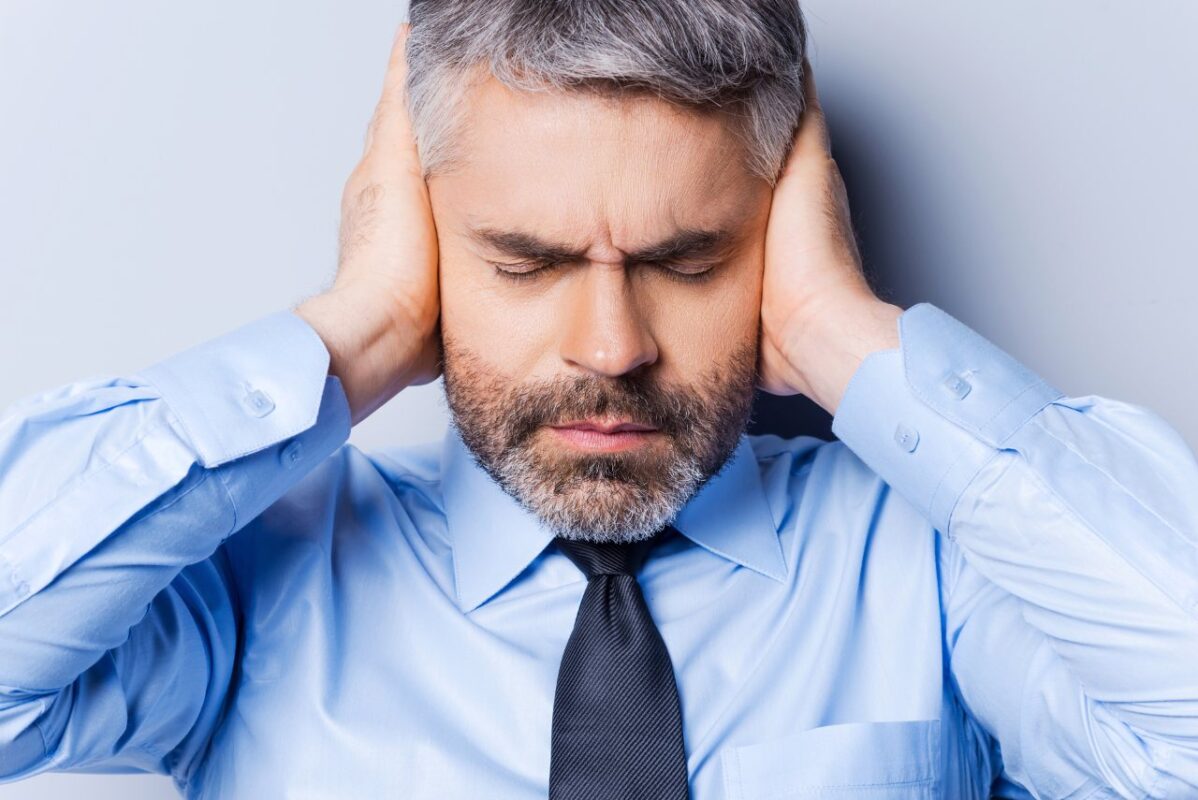
Hyperacusis is a condition that amplifies your perception of everyday noises, transforming mundane sounds like a tap running into overwhelming auditory experiences. This enhanced sensitivity can disrupt daily life, making routine activities at home or work challenging and often leading individuals to withdraw from social engagements to avoid the stress and anxiety triggered by loud environments.
Reliable figures for how common hyperacusis is are hard to come by — estimates vary widely because there is no single agreed definition — but it often occurs alongside tinnitus, or a constant ringing in the ears.
What is Hyperacusis?
Hyperacusis is characterised by an abnormally low tolerance to ordinary levels of noise, affecting one or both ears. It’s not just about hearing sounds louder; it’s about experiencing them as intrusive or painfully intense. This condition can make even your own voice seem startlingly loud and can lead to significant discomfort, heightened stress, and a reluctance to participate in public or noisy settings due to:
- Social isolation
- Withdrawal from social activities
- Phonophobia (fear of loud noises)
- Potential depression
Hyperacusis is especially prevalent among individuals with tinnitus and older adults.
Identifying the Symptoms of Hyperacusis
Symptoms of hyperacusis vary from mild to severe and can include:
- Ordinary sounds appearing excessively loud
- Discomfort from your own voice
- Ear pain
- Headaches and difficulty concentrating
- Severe reactions to sudden noises, including pain or a popping sensation
- Anxiety, poor sleep, and fatigue
- Fear of social situations
In children, hyperacusis may manifest as crying or screaming in response to everyday sounds.
Exploring the Causes
Several factors can contribute to the development of hyperacusis:
- Exposure to loud noises: Prolonged or sudden exposure, such as attending concerts or experiencing a gunshot, is a primary cause.
- Head, jaw, or ear injury: Hyperacusis can be triggered by trauma to these regions..
- Viral infections: These can affect the facial nerve or inner ear, leading to heightened sound sensitivity.
- Surgery complications: Procedures involving the jaw or face can inadvertently affect the inner ear.
- Certain medications: Some drugs, including those used in chemotherapy, may cause auditory side effects.
- Autoimmune disorders: Conditions like lupus can trigger hyperacusis.
- Temporomandibular joint disorders: Issues with the jaw joint may increase the risk of hyperacusis.
- Autism: Many individuals on the autism spectrum experience sensory sensitivities, including hyperacusis.
Diagnosis and Treatment
If you suspect you have hyperacusis, consult an ear, nose, and throat (ENT) specialist. Diagnosis typically involves a physical exam, medical history review, and specific auditory tests like pure-tone audiometry.
Treatment strategies focus on managing symptoms and reducing sound sensitivity through approaches such as:
- Cognitive Behavioural Therapy (CBT): Helps manage emotional responses to sounds.
- Tinnitus Retraining Therapy (TRT): Uses sound therapy to decrease sensitivity.
- Sound Desensitisation: Involves listening to static noise to gradually increase sound tolerance.
Surgery is very rarely used for hyperacusis and remains largely experimental, so most people are helped by sound therapy and CBT rather than an operation.
Prevention and Distinguishing from Misophonia
While preventing hyperacusis involves avoiding prolonged exposure to loud noises, using earplugs too frequently can exacerbate sensitivity. Instead, engaging with everyday sounds in moderation is recommended to normalise your auditory perception.
Unlike hyperacusis, misophonia involves strong emotional reactions to specific sounds and does not primarily involve auditory sensitivity. However, the conditions can overlap when loudness leads to aversion.
Living with hyperacusis means that everyday sounds are perceived as too loud. Recognising this condition early on and consulting with a specialist can help in controlling the sensitivity and improving quality of life. It is important to seek professional help if normal sounds start to seem abnormally loud, as this is essential for getting a diagnosis and appropriate treatment.