On This Page
- Understanding the Link Between Hearing and Brain Function
- The Role of Comprehensive Hearing Tests
- Why Cognitive Screening May Be Recommended
- When Cognitive Screening Can Be Helpful
- The Benefits of Cognitive Screening Assessments
- How Choosing Cognitive Screening Can Support Long-Term Brain Health
- What to Expect During a Hearing Assessment
- Expert Hearing Care in the UK
- A More Complete Picture of Hearing Health
Hearing tests are so important for our health, checking how well you hear sounds and detecting any issues before they become too serious. But, these days, hearing care looks beyond hearing alone. Increasingly, hearing assessments include cognitive screening and other subtle extras to better understand how your brain processes the sounds you hear.
These inclusions recognise that hearing and brain health are closely connected. Difficulties with hearing can sometimes place extra strain on cognitive functions such as attention, memory, and concentration. With cognitive screening as part of a hearing assessment, professional audiologists can gain a more complete understanding of your overall hearing health.
For many people, this combined approach provides reassurance, clarity, and a more personalised path towards effective treatment. Here’s the importance of opting in for cognitive screening during hearing assessments, and what you can expect during yours.
Understanding the Link Between Hearing and Brain Function
Hearing is not just about the ears. While the ears capture sound, it is the brain that interprets and makes sense of what we hear. When we listen, it involves several cognitive functions, including attention, memory, and language processing.
If hearing becomes more difficult, the brain must work harder to interpret sounds and fill in missing information. Over time, this extra effort can lead to mental fatigue and difficulty concentrating, particularly in busy listening environments.
Because of this connection, many hearing specialists now consider both hearing ability and cognitive function when assessing a patient’s hearing health.
The Role of Comprehensive Hearing Tests

A hearing assessment involves several different evaluations that measure how well you hear sounds and understand speech in different situations.
There are many types of hearing tests, each designed to measure a specific aspect of hearing ability. Some tests assess how quietly you can hear tones, while others measure how well you understand speech in background noise.
These tests provide valuable information about how your ears respond to sound. When paired with cognitive screening, they offer a clearer picture of how both the ears and the brain are working together during communication.
Why Cognitive Screening May Be Recommended
Cognitive screening during a hearing assessment is sometimes incorrectly believed to be able to diagnose conditions such as dementia. However, this is not the case. Instead, it helps audiologists understand how your brain is processing sound and whether additional support may be beneficial.
Some people may struggle to follow conversations even when hearing tests show only mild hearing loss. In these cases, cognitive screening can help identify whether factors such as attention or memory are influencing how speech is understood.
By gathering this information, audiologists can tailor treatment recommendations more accurately to each person’s needs, so hearing doesn’t tire them out.
When Cognitive Screening Can Be Helpful
Not every hearing assessment will include cognitive screening, but it can be particularly useful in certain situations.
For example, screening may be recommended if someone experiences:
- Difficulty understanding speech in noisy environments
- Listening fatigue during conversations
- Trouble concentrating during meetings or discussions
- Increased effort when following conversations
- Concerns about memory or attention during communication
By testing these areas, audiologists can better determine whether hearing challenges are purely auditory or if cognitive factors may also be playing a role.
The Benefits of Cognitive Screening Assessments

Including cognitive screening as part of a hearing assessment can offer several important benefits. While hearing tests focus on how well your ears detect sound, cognitive screening provides insight into how your brain processes and interprets that information.
Some of the key benefits are:
- A clearer understanding of communication challenges
Cognitive screening can help explain why someone may struggle to follow conversations, even if their hearing loss appears mild on standard tests. - Earlier identification of potential concerns
Screening may highlight subtle changes in attention, concentration, or memory that could affect communication in everyday situations. - More personalised hearing care
By understanding both hearing ability and cognitive factors, audiologists can recommend solutions that better suit your individual listening needs and lifestyle. - Improved communication strategies
Screening results may lead to practical advice on how to reduce listening strain in challenging environments, such as busy workplaces or social settings. - Greater peace of mind
For many people, cognitive screening simply provides reassurance that their brain is processing sound effectively, helping them feel more confident about their hearing health.
How Choosing Cognitive Screening Can Support Long-Term Brain Health
Research continues to explore the relationship between hearing loss and cognitive health. Some studies suggest that untreated hearing loss may increase the mental effort required to understand speech, which can place additional strain on the brain over time.
This does not mean hearing loss directly causes cognitive decline, but it does highlight the importance of addressing hearing difficulties early.
Regular hearing assessments help identify hearing changes before they significantly affect daily communication. Early treatment allows people to remain socially active, mentally engaged, and confident in their ability to communicate.
What to Expect During a Hearing Assessment
Many people feel unsure about what happens during a professional hearing assessment. In reality, the process is straightforward, comfortable, and designed to give a detailed understanding of your hearing health.
A typical hearing assessment will include:
- Initial discussion about your hearing
Your audiologist will begin by asking about your hearing history, lifestyle, and any difficulties you may have noticed. This conversation helps them understand your concerns and how hearing may be affecting your daily life. - Ear examination
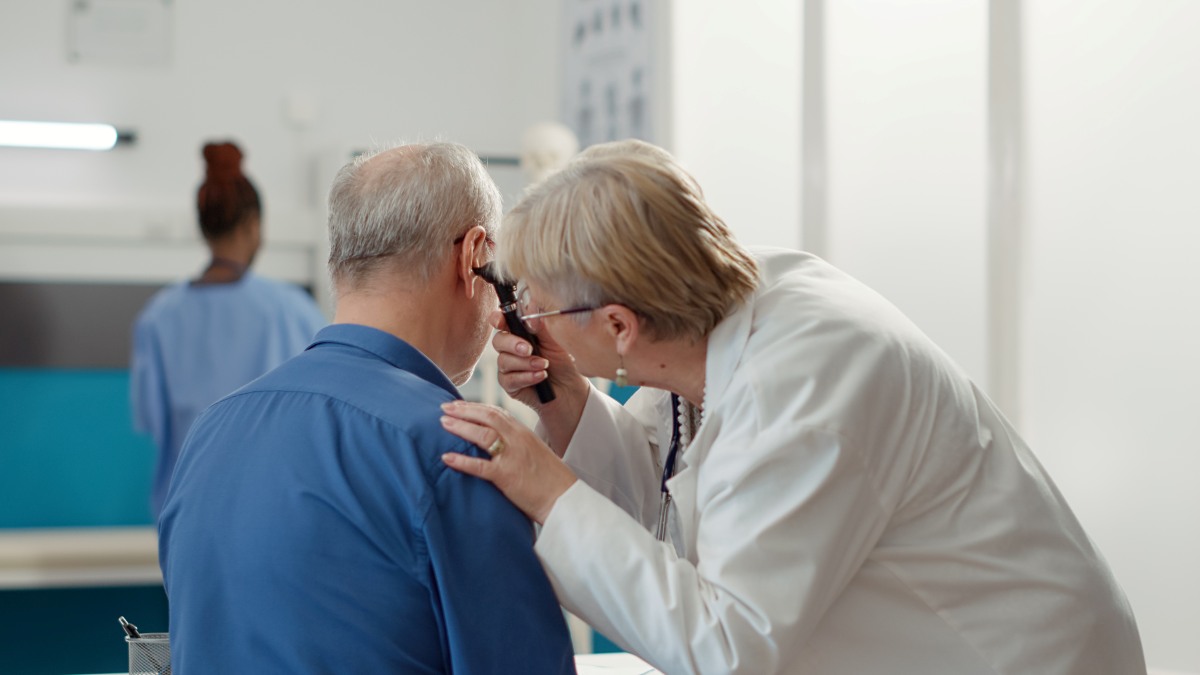
The audiologist will examine your ears using a small instrument called an otoscope. This allows them to check for issues such as ear wax build-up, infections, or anything else that may affect hearing. - Hearing tests
You will then complete a series of hearing tests designed to measure how well you hear different tones and speech. These tests are painless and usually carried out using headphones in a quiet environment. - Speech understanding assessments
Some tests measure how clearly you understand speech, particularly in background noise. This helps identify listening challenges that may occur in real-world environments. - Cognitive screening (if recommended)
If cognitive screening is included, you may complete a few simple tasks that assess areas such as attention, memory, or language processing. These tasks are quick and designed to provide helpful insights without causing stress. - Review of results and recommendations
Once the assessment is complete, the audiologist will explain your results clearly and discuss any recommended next steps, which may include hearing technology, communication strategies, or ongoing monitoring.
Expert Hearing Care in the UK

Modern hearing assessments focus on understanding the full listening experience, not just the ears themselves. By considering both hearing ability and cognitive factors, audiologists can provide more comprehensive care.
At VIP Hearing Solutions, our team offers an advanced hearing screening service designed to evaluate your hearing thoroughly and provide personalised recommendations. Our experienced audiologists use modern testing methods to ensure you receive accurate results and expert guidance tailored to your lifestyle.
We’ll help you to understand your hearing health clearly and take proactive steps towards maintaining strong communication and overall wellbeing.
A More Complete Picture of Hearing Health
Hearing assessments today go far beyond measuring simple sound detection. By including cognitive screening where appropriate, audiologists can gain deeper insight into how you hear, understand, and process the world around you.
This more comprehensive approach helps identify hearing challenges earlier, supports personalised treatment, and ensures that both hearing and brain health are considered together.
If you have noticed changes in your hearing, speech understanding, or listening effort, a professional assessment can provide the clarity you need. With expert support and the right care, you can protect your hearing health and continue enjoying confident communication in every aspect of daily life.