
On This Page
Ever found yourself turning up the telly, only to realise it’s too loud for everyone else in the room? Or perhaps you’ve noticed that you’re struggling to follow conversations in noisy places, even though you can hear the background noise just fine. If this sounds familiar, you might be experiencing what audiologists call “cookie bite hearing loss”.
What’s With the Biscuit Reference?
Nothing to do with biscuits. The name describes the shape of your audiogram: when mid-range hearing dips but low and high frequencies stay intact, the plotted line looks as though a bite has been taken from the middle. Clinicians also call this a U-shaped or saucer-shaped pattern.
Let’s clear up the confusion right away – cookie bite hearing loss has nothing to do with your favourite tea time snack. The name comes from the shape of the audiogram results. When plotted on a graph, the pattern of hearing loss looks like someone’s taken a bite out of the middle, leaving the top and bottom intact.
The Nitty-Gritty: What’s Actually Happening?
Cookie bite hearing loss affects the middle frequencies, typically around 500 to 2000 Hz, and is sensorineural — it involves the inner ear or the nerve pathways to the brain. Because this band carries much of human speech, words can sound muffled or unclear even when you still detect sound.
Cookie bite hearing loss affects the middle frequencies of hearing, typically between 500 Hz and 2000 Hz. This range is particularly important because it covers many of the sounds in human speech. It’s a type of sensorineural hearing loss, which means it involves the inner ear or the nerve pathways from the inner ear to the brain.
Why Does It Happen?
Cookie bite hearing loss is most often genetic and can run in families, frequently linked to inherited gene changes. It is only rarely acquired — some ototoxic medications, noise exposure or age-related change can affect hearing, though these more typically involve the higher frequencies rather than this mid-range pattern.
There’s no one-size-fits-all answer to this question. Cookie bite hearing loss can be caused by a variety of factors:
- Genetics: It often runs in families.
- Certain medications: Some drugs can affect hearing in the mid-range frequencies.
- Noise exposure: Though less common, prolonged exposure to specific types of noise can contribute.
- Age-related changes: While not the typical pattern for age-related hearing loss, this can occur.
How Do You Know If You Have It?
It can be subtle. Common signs include struggling to follow speech in noisy places, trouble hearing certain consonants, and particular difficulty with women’s and children’s voices — feeling you can hear but not quite understand. A full hearing test with an audiogram is the only way to confirm it.
Unlike some types of hearing loss that are obvious from the get-go, cookie bite hearing loss can be a bit sneaky. You might notice:
- Difficulty understanding speech, especially in noisy environments
- Trouble hearing certain consonants
- Feeling like you can hear, but not understand what’s being said
- Particular difficulty with women’s and children’s voices
If you’re experiencing any of these symptoms, it’s worth getting your hearing checked. A proper audiological evaluation is the only way to diagnose cookie bite hearing loss accurately.
What Can Be Done About It?
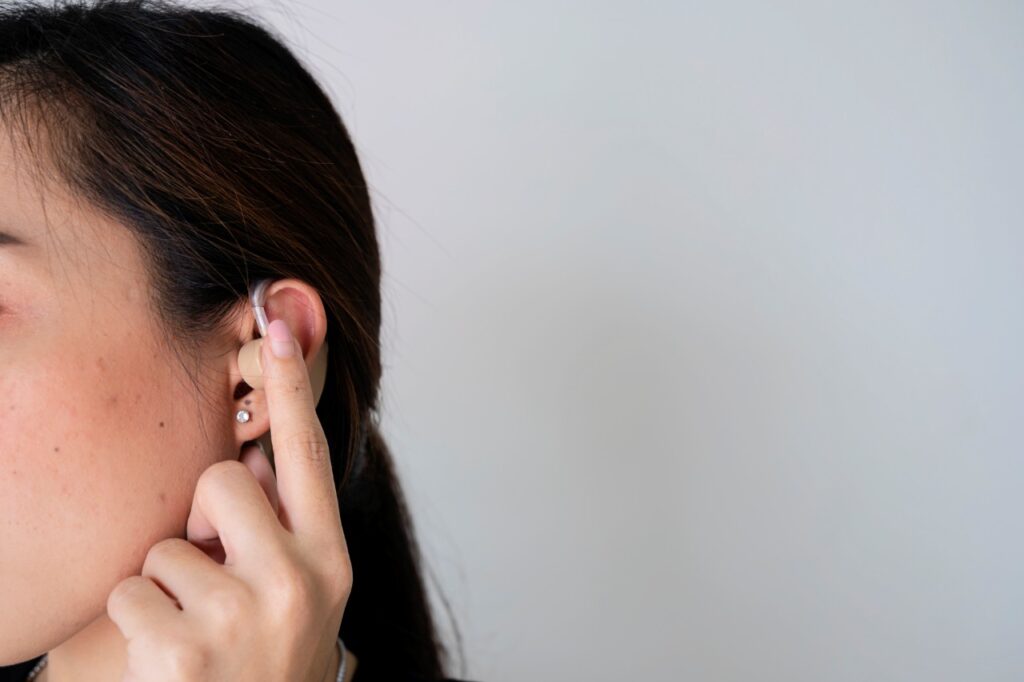
Quite a lot. Modern hearing aids can be programmed to amplify the specific mid-range frequencies you’re missing, restoring clarity. Assistive listening devices help in situations like phone calls or watching television, while communication strategies — facing the speaker, cutting background noise — make a real difference. Regular reviews keep everything tuned.
Now for the good news – there are several ways to manage cookie bite hearing loss:
- Hearing Aids: Modern high quality hearing aids can be programmed to amplify the specific frequencies you’re struggling with. They’re not your grandad’s clunky devices – today’s hearing aids are sleek, smart, and often barely noticeable.
- Assistive Listening Devices: These can be helpful in specific situations, like watching telly or during phone calls.
- Communication Strategies: Simple techniques like facing the person speaking or reducing background noise can make a big difference.
- Regular Check-ups: Hearing can change over time, so regular hearing tests are important to keep on top of any changes.
Living with Cookie Bite Hearing Loss
If you’ve been diagnosed with cookie bite hearing loss, remember – you’re not alone. Many people live full, active lives with this condition. Here are a few tips:
- Be open about your hearing loss. Let friends, family, and colleagues know so they can help make communication easier.
- Don’t be shy about asking people to repeat themselves or speak more clearly.
- Consider joining a support group. Sharing experiences with others who understand can be incredibly helpful.
- Keep up with your hearing aid maintenance and appointments.
What’s Next?
The first step is a proper hearing test. A HCPC-registered audiologist can run a full assessment, plot your audiogram and confirm whether the pattern is cookie bite. From there they’ll talk you through options — usually hearing aids tuned to your profile — and arrange follow-up to track any changes.

If you think you might have cookie bite hearing loss, the first step is to get a proper hearing test. At our clinic, we provide comprehensive hearing assessments that can identify cookie bite hearing loss and other types of hearing impairment.
Remember, hearing health is an important part of your overall well being. Don’t let hearing difficulties hold you back from fully engaging with the world around you. With the right support and tools, you can continue to enjoy all the sounds life has to offer – from your favourite tunes to the laughter of loved ones.
Ready to take the next step? Give us a ring or pop in for a chat. We’re here to help you hear your best, whatever your hearing profile might be.