
On This Page
- Manage Background Noise Through Surface Choices
- Lighting for Lip Reading and Visual Cues
- Open Plan Layouts with Defined Spaces
- Visual Alert Systems
- Reduce Appliance Noise
- Conversation-Friendly Seating Arrangements
- Technology Integration
- Creating Supportive Environments
- Key Takeaways
- FAQs
- Do I need to remove all hard flooring?
- Are visual alert systems expensive?
- Will hearing-friendly changes make my home look institutional?
- Can open plan living work with hearing loss?
- What’s the single most effective change?
- Do these changes help with hearing aids?
Living with hearing loss doesn’t mean compromising on having a comfortable, beautiful home – it just means being a bit more thoughtful about design choices that make daily life easier. Small adjustments to acoustics, lighting, and layout can dramatically improve communication and reduce the frustration that often comes with trying to follow conversations or hear important sounds in challenging environments. The good news is that most hearing-friendly design principles actually benefit everyone, not just those with hearing difficulties.
Manage Background Noise Through Surface Choices
Hard surfaces like wooden floors, tiles, and bare walls create sound that bounces around rooms, making it harder to distinguish speech from background noise – this echo effect is exhausting for anyone with hearing loss because their brain is working overtime to separate meaningful sounds from the jumble. Soft furnishings absorb sound rather than reflecting it, which creates a much calmer acoustic environment.
Thick curtains, upholstered furniture, rugs, and even wall hangings all help dampen sound reverberation. You don’t need to carpet every surface or drape fabric everywhere; strategic placement of soft materials in rooms where conversation happens makes the real difference. A large rug in your living room, heavy curtains in the dining room, and fabric-covered furniture create better acoustics than bare spaces with minimal soft furnishings.
Cork or rubber underlay beneath hard flooring helps absorb impact sounds that would otherwise travel through the structure. If you love the look of hard floors but struggle with the acoustics, this compromise lets you keep the aesthetic whilst improving sound quality.
Lighting for Lip Reading and Visual Cues

Many people with hearing loss rely on lip reading and facial expressions to supplement what they hear – this only works if faces are properly lit. Positioning seating so that natural light falls on faces rather than creating backlit silhouettes makes conversation much easier; the person speaking shouldn’t be sitting with a bright window behind them because their face becomes shadowed and difficult to read.
Adjustable lighting gives you control over brightness depending on time of day and activity. Harsh overhead lighting can create shadows on faces, whilst softer, well-positioned lamps illuminate faces more naturally – aim for lighting that’s bright enough to see clearly but not so stark it’s uncomfortable.
Avoid placing seating arrangements where people face into glare from windows or bright lights; squinting makes lip reading harder and causes eye strain. If your main seating area has challenging natural light, consider adjustable blinds or curtains that let you control brightness without darkening the room completely.
Open Plan Layouts with Defined Spaces
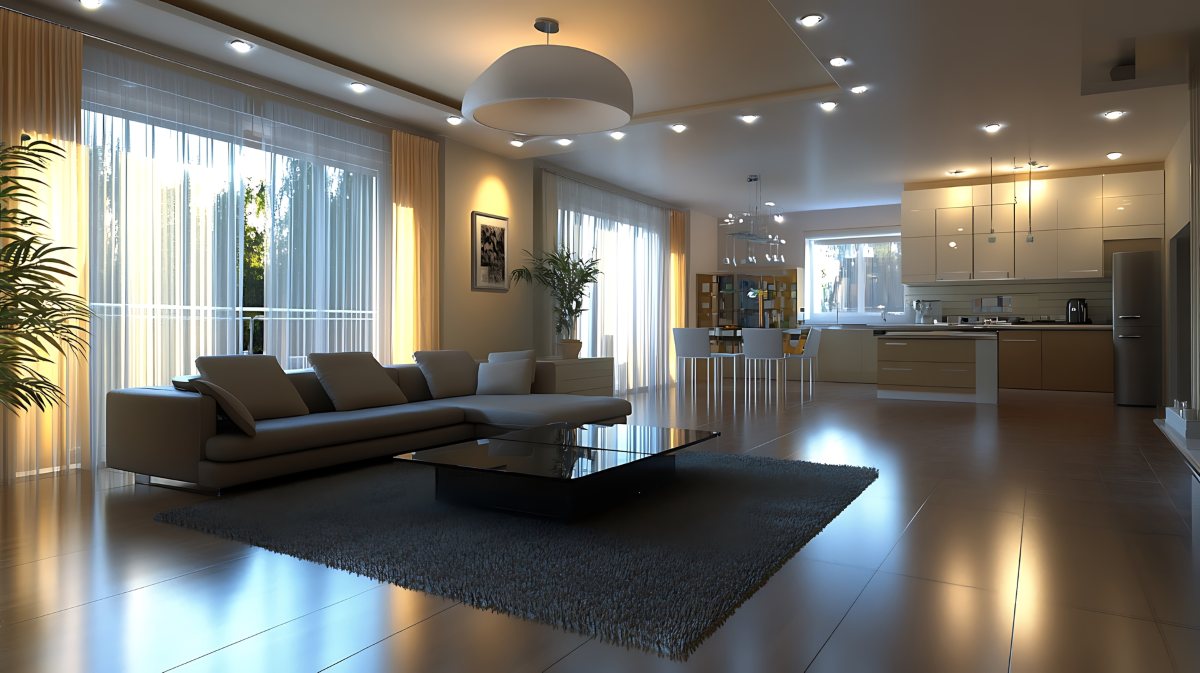
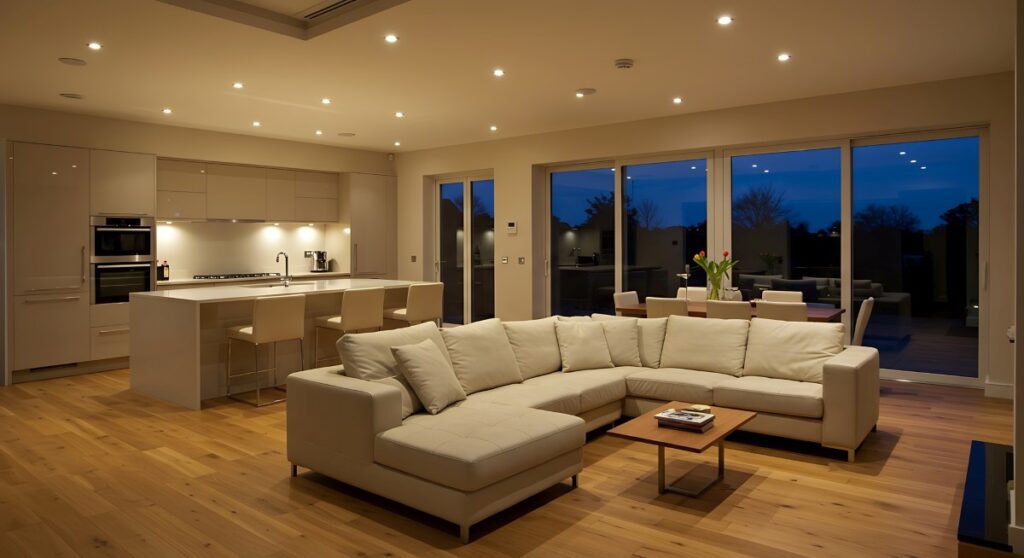
Open plan living can actually work well for hearing loss because there are fewer walls blocking sightlines – being able to see someone means you can communicate even if you can’t hear them perfectly. The challenge is managing acoustics in large open spaces where sound travels and echoes more than in smaller rooms.
Creating defined zones within open spaces using furniture, rugs, or even different ceiling heights helps contain sound somewhat. A conversation area with a rug and upholstered furniture creates a quieter zone within a larger space; kitchen areas with hard surfaces for practical reasons can be separated acoustically from living areas through thoughtful layout.
Consider where noise-generating appliances are positioned – if your washing machine, dishwasher, or noisy fridge are in or near main living areas, their sound competes with conversation. Tucking these into utility rooms or positioning them as far from seating areas as possible reduces background noise during daily life.
Visual Alert Systems
Doorbells, smoke alarms, and phone alerts all rely on hearing – visual alert systems flash lights instead of (or in addition to) making sounds, ensuring you don’t miss important notifications. These aren’t institutional-looking medical devices anymore; modern visual alert systems are discreet and can integrate into smart home systems.
Flashing doorbell alerts can be positioned wherever works best for you; smoke alarm systems with visual components ensure fire safety doesn’t depend solely on hearing. Some systems connect to vibrating devices you can wear or place under pillows, which is particularly useful for alerts you need to notice whilst sleeping.
Video doorbells let you see who’s at the door even if you don’t hear the bell, adding security and convenience. Smart home systems can send alerts to phones or tablets as notifications, backup systems if you miss audio or visual alerts.
Reduce Appliance Noise
Modern appliances are often quieter than older models, which helps, but placement and insulation matter too. Dishwashers and washing machines generate significant noise that makes conversation impossible nearby – if you’re replacing appliances, decibel ratings in specifications tell you how loud they’ll be (look for ratings below 45dB for quiet operation).
Acoustic panels behind or under noisy appliances absorb some sound, though this needs planning during kitchen installation rather than as an afterthought. Closing doors between appliance areas and living spaces when machines are running is simple but effective.
TVs and radios create background noise that competes with conversation; using headphones or hearing aid-compatible streaming systems lets you enjoy media at comfortable volume without forcing others to shout over it. Many modern hearing aids connect directly to TVs via Bluetooth or dedicated streamers, sending audio directly to your ears whilst letting others hear normal volume.
Conversation-Friendly Seating Arrangements

How furniture is arranged affects how easily people can communicate – seating should let people face each other at reasonable distances rather than requiring shouting across large rooms. Circular or U-shaped seating arrangements are better than straight lines because everyone can see everyone else’s faces.
Avoid positioning seats directly in front of noisy areas like fish tanks, water features, or ticking clocks; constant background sounds make conversation harder. High-backed chairs and sofas create acoustic barriers that can help contain sound, making the conversation area quieter relative to the rest of the room.
Consider ceiling fans and ventilation systems – whilst these serve practical purposes, constant mechanical hum creates background noise that’s tiring to filter out. Variable speed controls let you adjust airflow versus noise as needed.
Technology Integration
Smart home systems can display visual information about what’s happening – if someone’s at the door, your phone shows a notification and video; if a timer goes off, lights flash as well as (or instead of) beeping. Voice-controlled systems reduce reliance on hearing beeps and alerts because you can ask devices directly about status.
Hearing loop systems installed in specific rooms transmit sound directly to compatible hearing aids, dramatically improving speech clarity by cutting out background noise and reverberation. These are particularly useful in rooms where important conversations happen regularly, like living rooms or home offices.
Creating Supportive Environments
Creating supportive environments for hearing loss extends beyond physical design to how spaces are used; having designated quiet areas where conversations can happen without competing noise makes social interaction less exhausting. It’s worth thinking about how your home functions practically rather than just how it looks.
The overall goal is reducing the cognitive load that hearing loss creates – when the environment is working with you rather than against you, conversations become less effortful and tiring. Small changes accumulate into significant quality of life improvements.
Key Takeaways
Creating a hearing-friendly home doesn’t require dramatic renovation or expensive specialist equipment – most improvements are straightforward design choices that create better acoustics and support visual communication. Soft furnishings to absorb sound, good lighting on faces, reduced background noise from appliances, and thoughtful furniture arrangement all help.
The beauty of hearing-friendly design is that it generally makes spaces more comfortable for everyone; better acoustics benefit all conversations, good lighting helps everyone see better, and reduced noise is universally pleasant. You’re not creating a special medical environment, just a thoughtfully designed home that works for people with varying abilities.
Start with one or two changes that address your specific challenges rather than trying to overhaul everything simultaneously – maybe that’s adding rugs and curtains to improve acoustics, or repositioning furniture so faces are better lit during conversation. Notice what helps and build from there.
And remember, if you’re concerned about your hearing health, you can discover modern treatments for hearing loss at VIP Hearing Solutions, all of which can work alongside environmental modifications.
FAQs
Do I need to remove all hard flooring?
No. You rarely need to rip out hard floors — strategic soft furnishings usually do the job. A large rug in your main conversation area, heavy curtains and upholstered seating absorb sound where it matters most, reducing the reverberation that blurs speech. Keep hard flooring in practical areas like kitchens if you prefer.
Not at all – strategic use of rugs and soft furnishings in conversation areas is usually enough. You can keep hard flooring for practical areas whilst improving acoustics where it matters most through targeted sound absorption.
Are visual alert systems expensive?
Not necessarily. Basic setups — such as a flashing doorbell or smoke-alarm alert — are relatively affordable, and you can start with essentials and add more over time. Importantly, if you have severe or profound hearing loss, you may be able to get a smoke alarm free from your fire and rescue service or local authority.
Basic systems start around £50-100; comprehensive whole-house systems can cost several hundred pounds. Many people start with essential items like doorbell and smoke alarm alerts, adding others over time as needed.
Will hearing-friendly changes make my home look institutional?
No — modern hearing-friendly design is essentially just good interior design. Soft furnishings, well-placed lighting and thoughtful layouts are standard decorating principles, and today's visual alert systems are discreet, often blending into smart-home setups. You end up with a warm, comfortable home that happens to be easier to hear and communicate in.
Modern hearing-friendly design is indistinguishable from good interior design generally – soft furnishings, good lighting, and thoughtful layouts are standard design principles anyway. You’re not adding obvious medical equipment.
Can open plan living work with hearing loss?
Yes. Open-plan living can actually help, because fewer walls mean clearer sightlines — and seeing someone's face supports communication even when you can't hear perfectly. The trade-off is that sound travels and echoes more, so use rugs, upholstered furniture and defined zones to absorb noise and create quieter conversation areas.
Yes, though it requires attention to acoustics through soft furnishings and zoning. The improved sightlines of open plan can actually help communication by keeping people visible even when not in the same defined room
What’s the single most effective change?
Improving acoustics with soft furnishings is usually the biggest win. Rugs, curtains and upholstered furniture absorb sound and cut the reverberation that blurs speech, making conversation clearer across every situation. Good lighting on people's faces during conversation is a close second, since it supports lip-reading and helps you catch visual cues.
Probably improving acoustics through soft furnishings – rugs, curtains, upholstered furniture – since reducing echo and reverberation makes speech clearer across all situations. Good lighting on faces during conversation comes a close second.
Do these changes help with hearing aids?
Yes — environmental changes and hearing aids work together, not as alternatives. Hearing aids perform much better in acoustically treated spaces with less background noise and reverberation, because there's less competing sound for them to process. Adding soft furnishings, reducing appliance noise and lighting faces well all make your aids more effective.
Absolutely – hearing aids work much better in acoustically treated spaces with less background noise. Environmental improvements and hearing aids work together to make communication easier rather than being alternative solutions.