Award-Winning Audiology
Audiology Health Clinic of the Year 2025 — SME News Greater London Enterprise Awards.

VIP Hearing Solutions — Private Audiology
Some hearing loss clears up completely. Some is permanent but treated very well indeed. Everything depends on which part of the ear is involved — so treatment starts by finding that out, with a HCPC-registered audiologist at our London, Eastcote or Brentwood clinic.

Audiology Health Clinic of the Year 2025
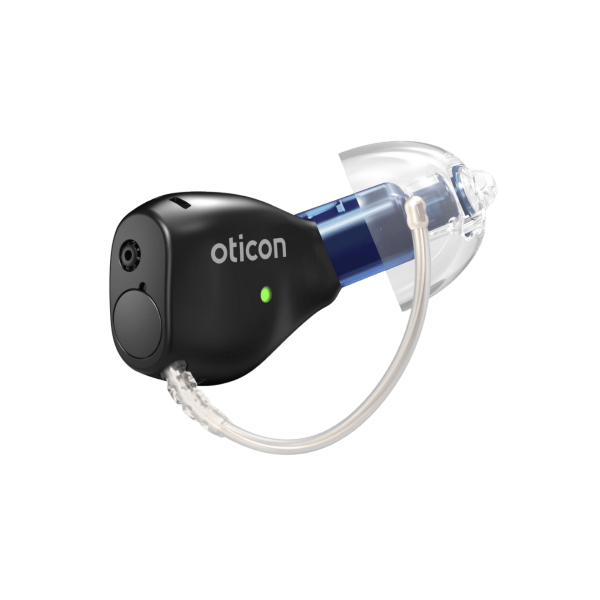
Most hearing loss can be helpedThe right care starts with the right diagnosis
Audiology Health Clinic of the Year 2025 — SME News Greater London Enterprise Awards.
We are not owned by a hearing aid manufacturer, so we fit from all seven major brands — and recommend the one that suits your ears.
Across Google and Doctify.
Every hearing aid fitting includes a free, no-obligation 30-day trial at home, at all three clinics.
The Short Answer
Hearing loss treatment starts with a diagnostic hearing test, because what can be done depends on which part of the ear is affected. Outer and middle ear causes — wax, infection, fluid behind the eardrum — usually clear, and hearing returns with them. Inner-ear loss, generally from age or noise, is normally permanent, and hearing aids tuned to your ears do the work instead. Hearing lost suddenly is the exception, and needs urgent NHS care that day. VIP Hearing Solutions treats all of it across three clinics.
What We Do
Treatment is built around what the assessment finds — which is why every route below starts from the same place.
01
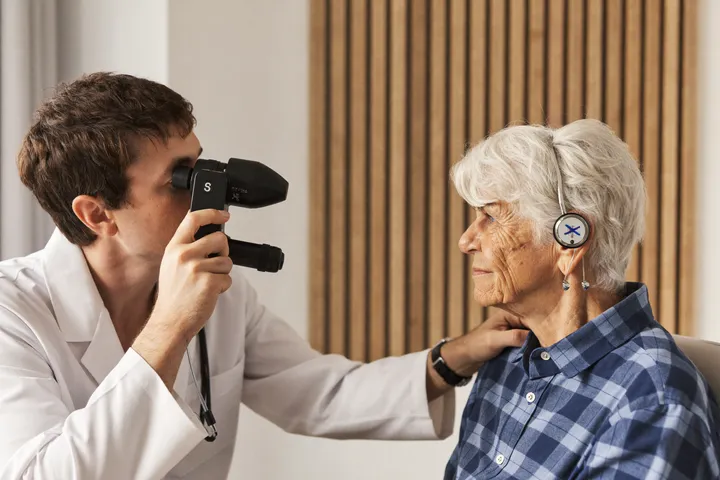
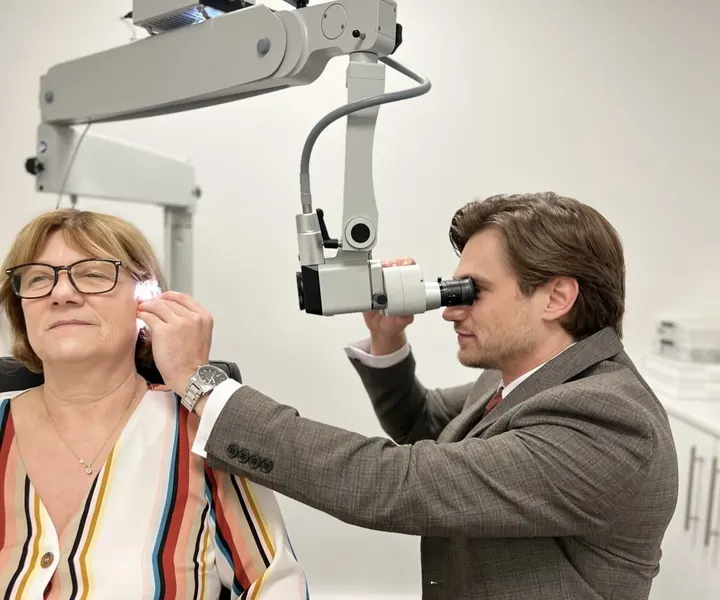
The starting point for every plan. Otoscopy, pure-tone audiometry in a soundproof booth, and further tests where clinically indicated — with your hearing test results explained the same appointment.
02
Where wax is the cause, clearing it usually brings hearing straight back. Microsuction ear wax removal at all three clinics, in the same visit where we can.
03
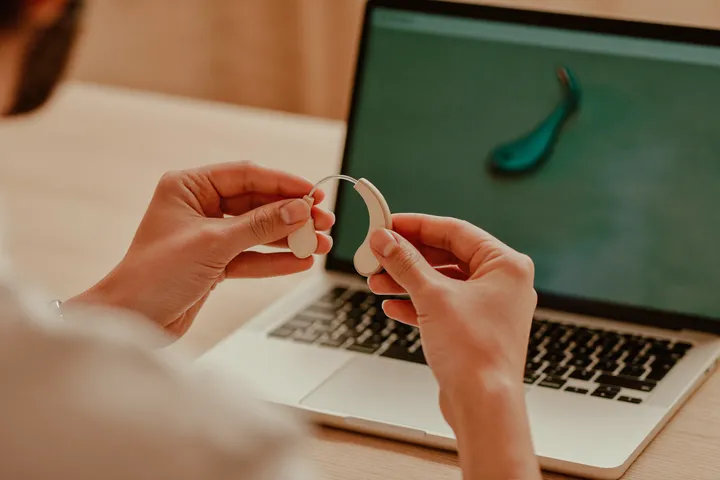
Seven brands and six styles, chosen for your audiogram and the situations you actually struggle in — then measured in your own ear canal and fine-tuned. See the hearing aids we fit.
04
A hearing aid on day one is not the finished job. Your brain needs weeks to re-learn sound it has been missing, so we tune, review and stay the people you come back to.
05
Most people with tinnitus also have some hearing loss, and treating the loss often quietens the sound. Tinnitus treatment and management runs alongside.
06
A suspected perforation, otosclerosis, sudden loss or a hearing loss too profound for hearing aids all belong with ENT or a cochlear implant centre. We say so plainly, and write the referral with your results attached.
VIP Hearing Solutions does not carry out ear surgery, fit cochlear implants, provide paediatric audiology or offer home visits. Where your treatment sits outside private audiology we will tell you, and refer you to the service that does it.
| Cause | Type | Can hearing come back? | What we do |
|---|---|---|---|
| Impacted ear wax | Conductive | Usually, once it is cleared | Microsuction at all three clinics |
| Ear infection or fluid behind the eardrum | Conductive | Often, once it settles | Assess and monitor; refer to your GP or ENT where needed |
| Perforated eardrum | Conductive | Many heal on their own | Assess, then refer to ENT |
| Otosclerosis | Conductive | Improved by surgery or by hearing aids | Assess; ENT referral, or fit hearing aids |
| Age-related (presbycusis) | Sensorineural | Permanent — and managed very well | Assess, fit, verify in your ear, follow up |
| Noise-induced | Sensorineural | Permanent — and managed very well | Assess and fit; custom protection to prevent more |
| Sudden hearing loss | Sensorineural | Time-critical — see the urgent signs below | Urgent NHS care first, then assess with us |
| Loss too profound for hearing aids | Sensorineural | Cochlear implant pathway | Honest assessment, then referral to an implant centre |
Same-week appointments · no GP referral needed · adults 18+
Your Appointment
Step 1 · about 10 min
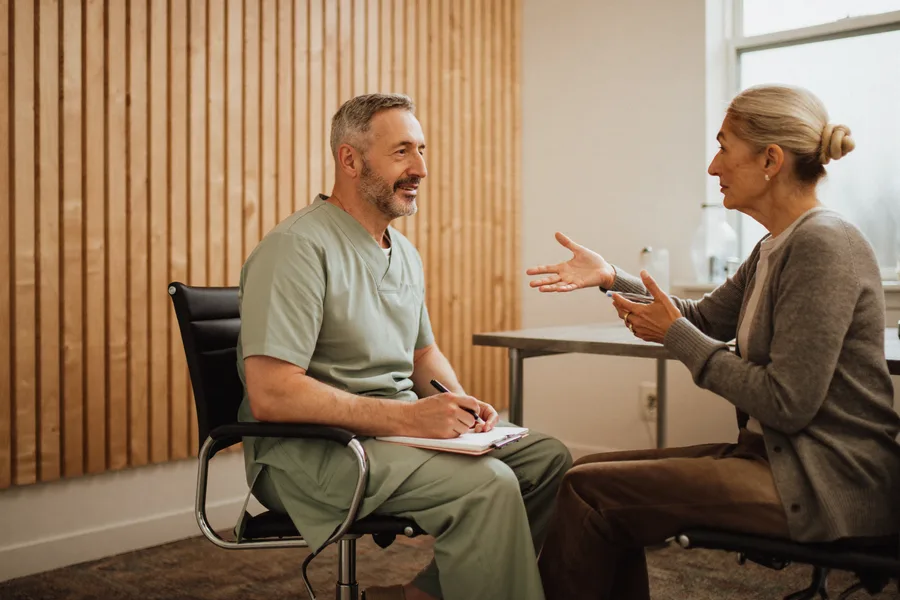
Before any equipment comes out, your audiologist asks about your history, your medications, the noise you have been exposed to, and — most usefully — the situations you actually struggle in. A restaurant, a meeting, the television.
Step 2 · about 30 min
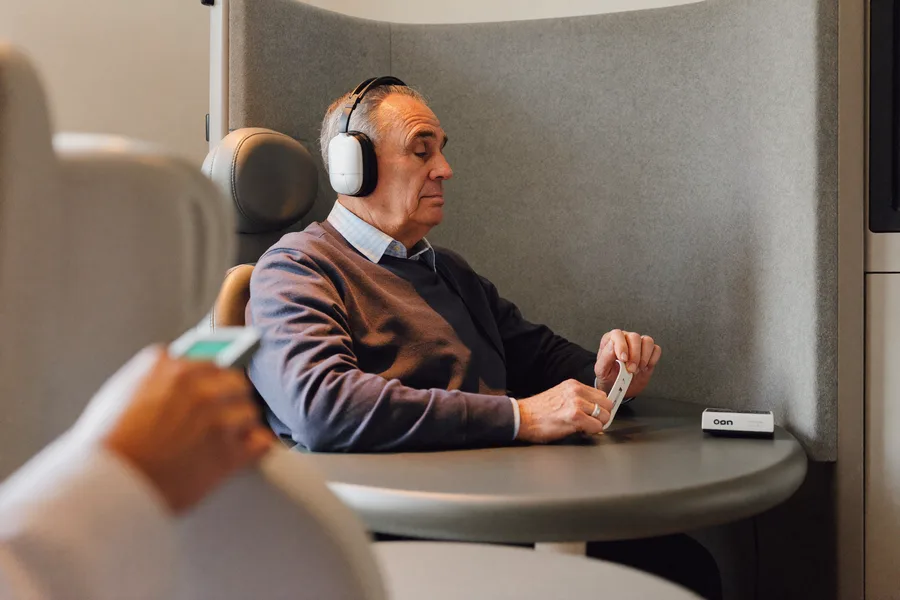
Otoscopy to look inside the ear, then a complete hearing test in a soundproof booth. Where your audiologist sees a clinical need, further tests follow — the ones that separate a conductive problem from an inner-ear one.
Step 3 · same appointment
You see your own results and have them explained properly: which type of loss you have, how much of it there is, and what can and cannot be brought back. Nothing is held over for a second appointment.

Step 4 · your choice
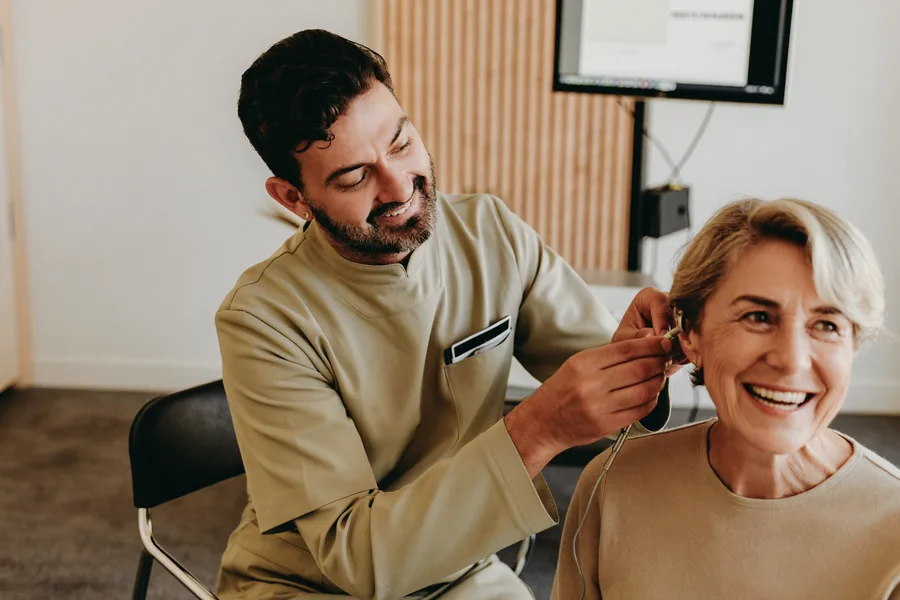
Wax removal, a hearing aid trial, a referral, or simply reassurance and a date to check again. If you do trial hearing aids, they are measured in your ear rather than left on the manufacturer’s default settings — and you have 30 days to change your mind.
Transparent Pricing
| Treatment | London | Eastcote | Brentwood |
|---|---|---|---|
| Full diagnostic hearing assessment | £100 | £40, or a free hearing screening test | Free |
| Ear wax removal (microsuction) — new patients, both ears included | £65 | £65 | £65 |
| Tinnitus assessment & management | £100 | £100 | £100 |
| Hearing aids, fitted and verified | From £3,295 per pair | From £3,295 per pair | From £3,295 per pair |
| 30-day no-obligation trial | Free | Free | Free |
| Aftercare and follow-up appointments | Included | Included | Included |
Nothing is charged beyond the assessment until you have seen your results and agreed what happens next.
There is no single price for hearing loss treatment, because the treatment depends on the cause — and nobody can know the cause before the assessment. If wax turns out to be behind it, the assessment and the removal may be the whole of it.
Eastcote offers a free hearing screening test — a genuine, audiologist-led check — or the same care in a longer, more comprehensive appointment for £40. Brentwood’s full diagnostic hearing test is free.
Hearing aid prices depend on the technology level you choose, and every fitting includes the free 30-day trial. See the full hearing aid prices breakdown, or read how we compare with NHS hearing care.
Interest-free finance is available on hearing aids. Ask your audiologist at the appointment.
Our Standards
All our HCPC-registered audiologists follow the British Society of Audiology’s recommended procedures — the gold standard for hearing assessment.
Every diagnostic hearing test we carry out follows the British Society of Audiology’s published methods.
Accurate thresholds at all three clinics, measured properly and without interruption.
Every audiometer and headphone set is professionally calibrated at least once a year, with routine checks in between.
We measure the sound actually reaching your eardrum and tune to that, rather than trusting a manufacturer’s default settings. It is the difference between a hearing aid that is switched on and one that is set up.
Your Clinicians
Your assessment is with a HCPC-registered audiologist who diagnoses and treats hearing loss every working day — and who will tell you honestly if you do not need us.
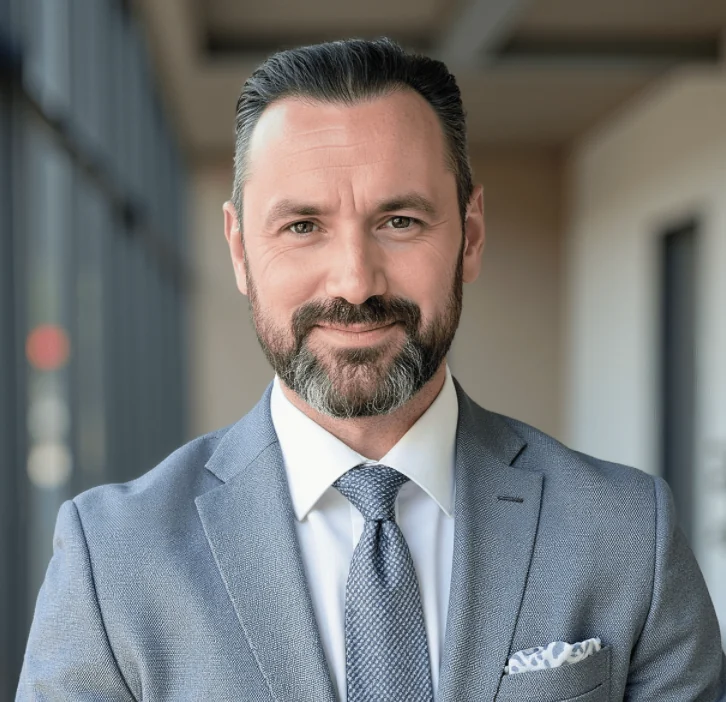 HCPC HAD00170
RHAD · MBAA
Partner & Chief of Audiology
In audiology since 1999, including 16 years as Chief of Audiology at 150 Harley Street.
 HCPC HAD03074
BSc (Hons) · MSc · MSHAA
Partner & Deputy Chief of Audiology
Practising in the Harley Street medical district for the best part of a decade.
 HCPC HAD02644
MSc Psych · MSHAA
Senior Audiologist
In hearing care since 2014. Expert in hearing rehabilitation and every method of ear wax removal.
 HCPC HAD004892
BSc (Hons) · MSc
Audiologist
MSc Audiological Science, UCL. Diagnostics, tinnitus and custom protection, with a sound-engineering background.
 HCPC HAD005650
FdSc
Hearing Aid Audiologist
Foundation Degree in Audiology, De Montfort University. Hearing-aid care and dedicated patient aftercare.
Where to Find Us

Bond Street ~5 min walk
Hearing tests in London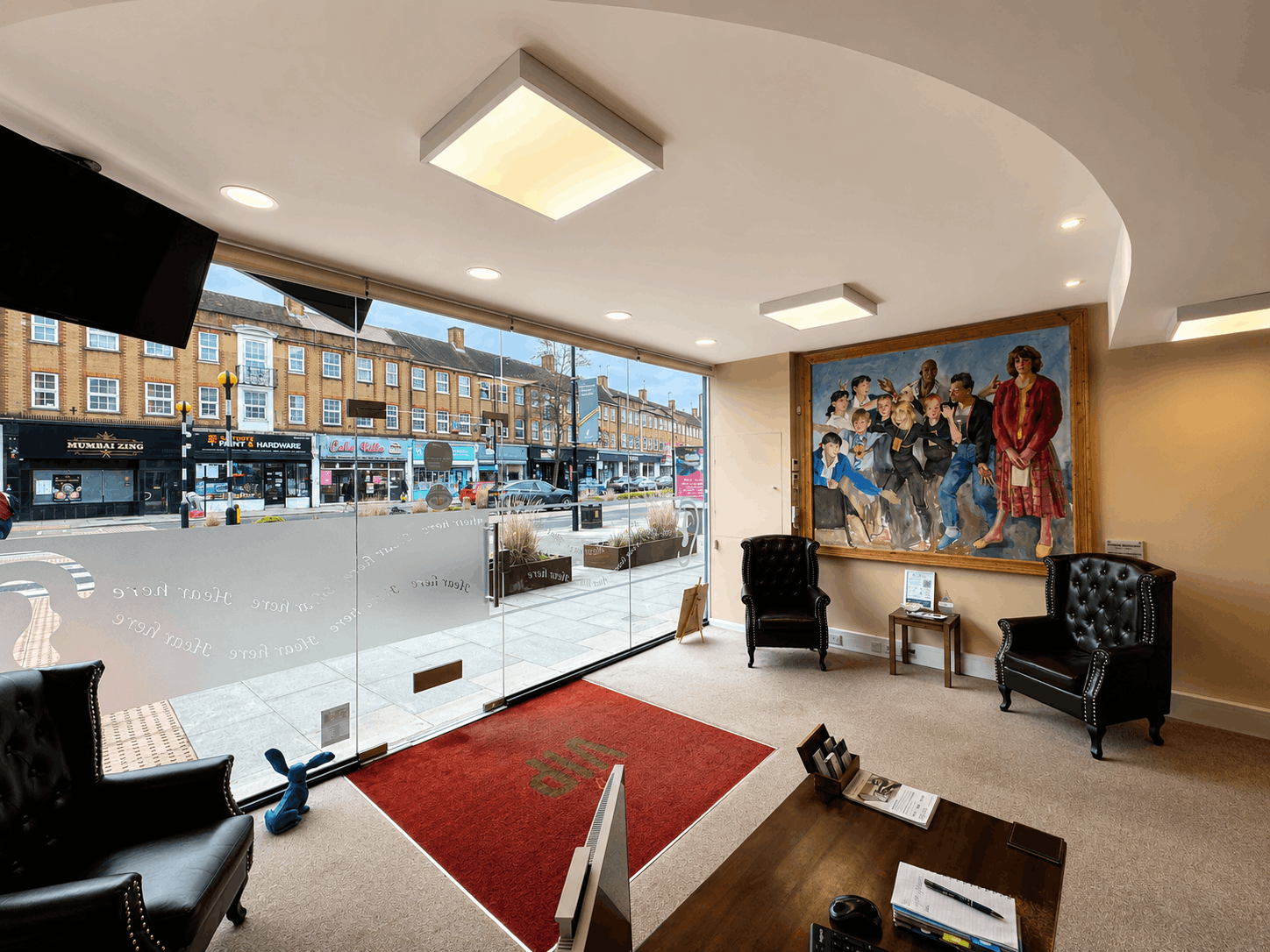

30 min free parking at Sainsbury’s William Hunter Way
Hearing tests in BrentwoodNot sure which clinic is closest? See all the areas we cover.
Why It Is Worth Doing
Untreated hearing loss is rarely dramatic. It is the effort of following a conversation in a busy room, the second time you ask someone to repeat themselves, the evening you decide not to go. Most people adapt around it for years before they do anything, and it is the adapting — the quiet withdrawal — that costs the most.
Hearing loss is one of the two largest modifiable risk factors for dementia identified by the 2024 Lancet Commission, which estimates it is associated with around 7% of dementia cases at a population level — level with high LDL cholesterol. That is an association, not a proven cause: it has not been shown that hearing loss causes dementia, or that treating hearing loss prevents it. It is one of several reasons audiologists encourage people not to leave a hearing loss unmanaged. Read more on hearing loss and dementia.
RNID estimates that around 10 million adults in the UK could benefit from hearing aids while only about 3 million use them. Its 2025 survey found that just 6% of people who have not been diagnosed with hearing loss had a hearing check in the past year — against 42% who had an eye test and 43% who had their blood pressure checked. The gap is not really about the technology; it is about the appointment nobody quite gets round to booking. If you want to hear what it sounds like first, try our hearing loss simulator.
Safety First
Most hearing loss comes on slowly and is not an emergency. A small number of presentations are, and getting seen quickly changes the outcome — so these are worth knowing before you book anything.
If hearing goes in one or both ears over a few days or less, the NHS asks you to request an urgent GP appointment or contact NHS 111 the same day. NICE asks that a loss which came on over three days or less within the past 30 days be seen within 24 hours. Treatment is usually steroids and works best started early — UCLH has urged doctors to treat sudden hearing loss within seven days. Do not wait for a private appointment; come to us afterwards.
Hearing loss in one ear together with drooping or altered sensation in the face on the same side needs immediate medical assessment. Contact your GP urgently or NHS 111.
Hearing that has noticeably deteriorated over a few weeks or months, rather than slowly over years, should be looked at urgently. NICE asks for an urgent referral in that situation, so speak to your GP as well as booking an assessment.
Hearing loss in one ear alone, ear discharge, persistent ear pain, ringing that pulses in time with your heartbeat, or episodes of dizziness are all worth having examined rather than watched. We assess, and refer you on where a medical opinion is needed.
This is the common picture by a very long way, and it is what we treat every working day. There is no urgency and no GP referral needed — but there is also no reason to give it another year. An assessment tells you what is actually going on.
For most people none of the urgent signs above applies, and the honest answer is that a hearing test is simply the only way to know what you are dealing with. If one of them does apply to you, act on that first — then come and see us.
From the Library
Questions, Answered
Yes — but what treatment means depends on the cause. Conductive hearing loss, where something in the outer or middle ear is blocking sound, can often be resolved: clearing impacted wax, treating an infection or draining fluid behind the eardrum usually brings hearing back. Sensorineural hearing loss, which comes from the inner ear and is usually caused by age or noise, is permanent — and it is managed very effectively with hearing aids that are measured and fine-tuned to your ears. A full diagnostic hearing test is what tells you which one you have.
Some hearing loss can. Where the cause is impacted ear wax, an ear infection, fluid behind the eardrum or, in some cases, a perforated eardrum, hearing generally returns once the cause is dealt with. Where the inner ear is involved the change is usually permanent, and treatment focuses on hearing aids rather than repair. The important exception is hearing that disappears suddenly: that is treated as an emergency because prompt medical treatment can recover it, so contact your GP urgently or NHS 111 the same day. VIP Hearing Solutions assesses which applies to you in a single appointment.
Conductive hearing loss happens in the outer or middle ear, where something is stopping sound from getting through — wax, infection, fluid or a problem with the small bones of the middle ear. It is often treatable and frequently temporary. Sensorineural hearing loss happens in the inner ear or the hearing nerve, most often through ageing or noise exposure. It is permanent, and hearing aids are the main treatment. Some people have both together, which is called mixed hearing loss.
You cannot tell from how it feels — the only reliable way is a diagnostic hearing test. At VIP Hearing Solutions that means otoscopy to look inside the ear, then pure-tone audiometry in a soundproof booth, plus further tests where your audiologist sees a clinical need. Those results separate a conductive problem from an inner-ear one, and you get them explained in the same appointment.
There is no fixed decibel threshold. NICE guidance is framed around impact rather than a number: it says to offer hearing aids to adults whose hearing loss affects their ability to communicate and hear. In practice that means the question is not how your audiogram scores, but whether you are missing things you want to hear. If you are struggling in restaurants, on the phone or with the television, that is the answer — regardless of where the line falls on the chart.
It depends on what the assessment finds. A full diagnostic hearing assessment is £100 in London, £40 at Eastcote (which also offers a free hearing screening test), and free at Brentwood. Microsuction ear wax removal is £65 for new patients — both ears included — at all three clinics, and if we find no wax, there is no charge. Hearing aids start from £3,295 per pair fitted, and every fitting includes a free 30-day trial with aftercare and follow-up appointments included. If wax turns out to be the cause, the assessment and removal may be the entire cost.
No. A cochlear implant is fitted surgically at a specialist implant centre, and VIP Hearing Solutions does not fit them or carry out ear surgery. Most implants in the UK are provided by NHS implant centres against national criteria, and a small number of private centres also offer them. What we can do is assess your hearing properly, tell you honestly whether an implant is worth exploring, and write a referral with your results attached so you reach the right service — your GP or an ENT specialist may also need to be involved, depending on the centre.
Yes. Every hearing aid fitting at VIP Hearing Solutions includes a free, no-obligation 30-day trial at home, at all three clinics. You wear them in your own life — your kitchen, your commute, your workplace — rather than judging them in a consulting room. If they are not right, you say so.
Treat it as urgent today. The NHS advises asking for an urgent GP appointment or contacting NHS 111 if hearing goes suddenly in one or both ears. NICE asks that a hearing loss which came on over three days or less within the past 30 days be seen within 24 hours. The usual treatment is steroids and it works best when started quickly — UCLH has urged doctors to treat sudden hearing loss within seven days. Do not wait for a private appointment. Book one with us afterwards, once the urgent medical care is under way.
They are different, and honestly both are good options depending on what you need. The NHS provides hearing aids free of charge and its audiology is clinically sound, but waiting times can be long and the choice of device is limited. Private care at VIP Hearing Solutions means you are seen within the same week, you choose from all seven major manufacturers, your aids are measured in your own ear canal, and your aftercare is with the same clinician. Which suits you comes down to how long you are willing to wait and how much the choice of device matters to you.
No — VIP Hearing Solutions is an adult service, for patients aged 18 and over, and we do not offer paediatric audiology or home visits. Children's hearing is assessed through NHS paediatric audiology, and your GP or health visitor can refer them.
In Our Patients’ Words
Live Google reviews from VIP Hearing Solutions patients across all three clinics.
Book Your Visit
Find out which type of hearing loss you have and what can be done about it — same-day where possible, otherwise within the week.
Or email info@viphearingsolutions.co.uk